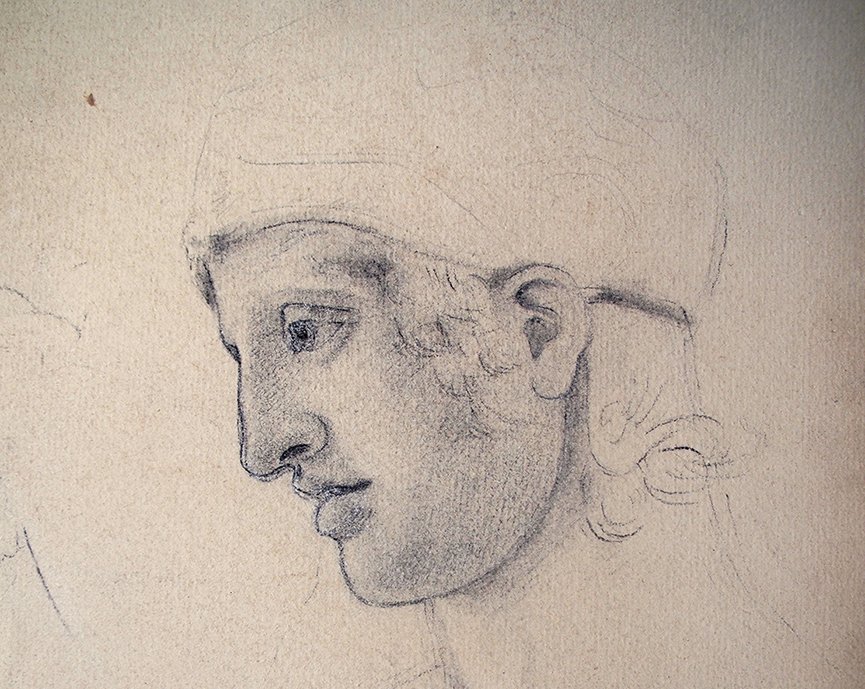
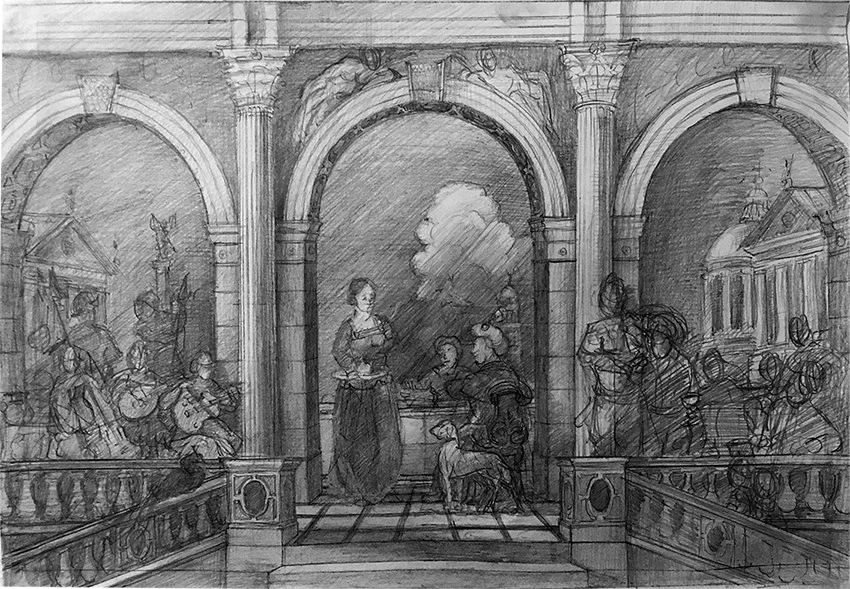
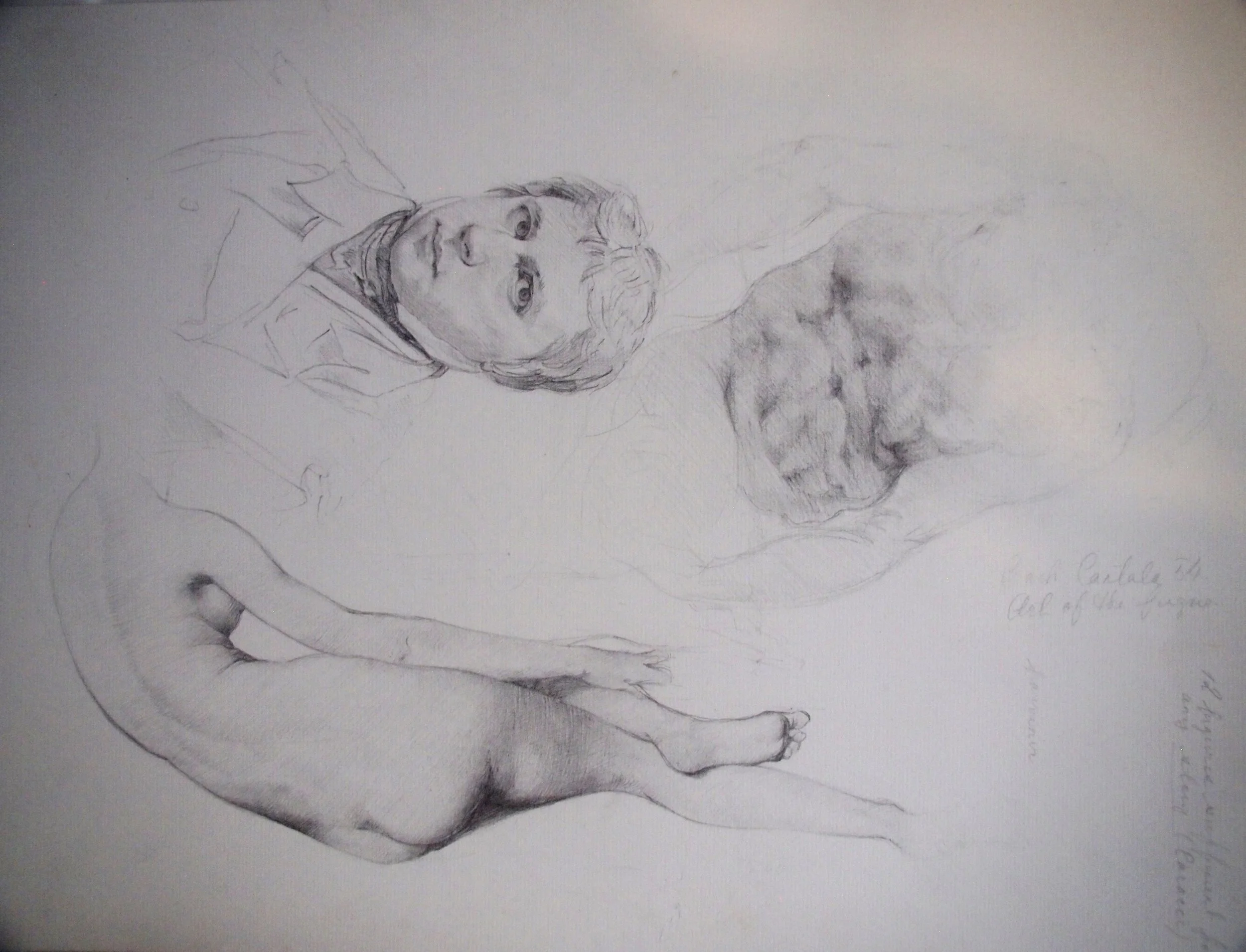
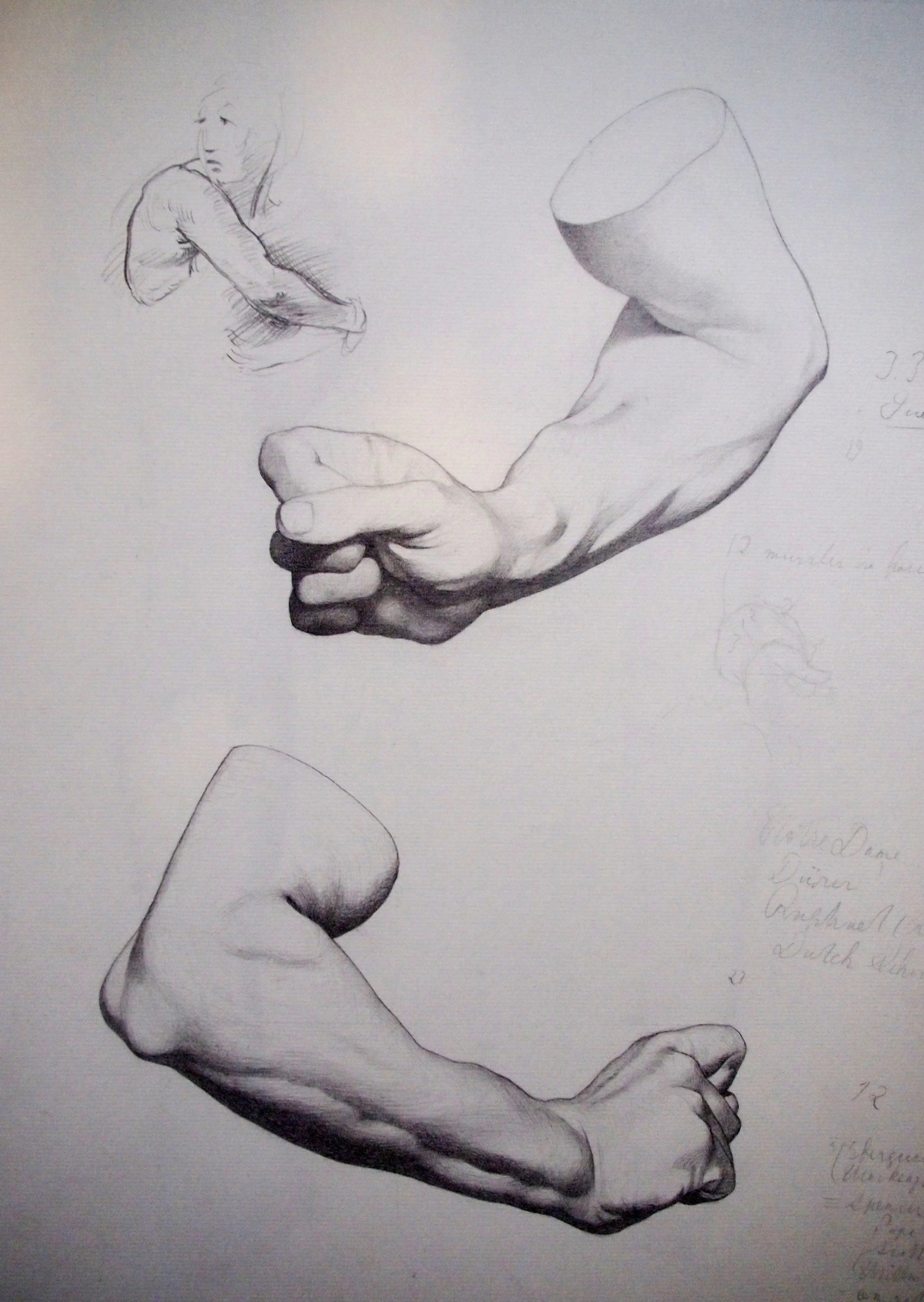
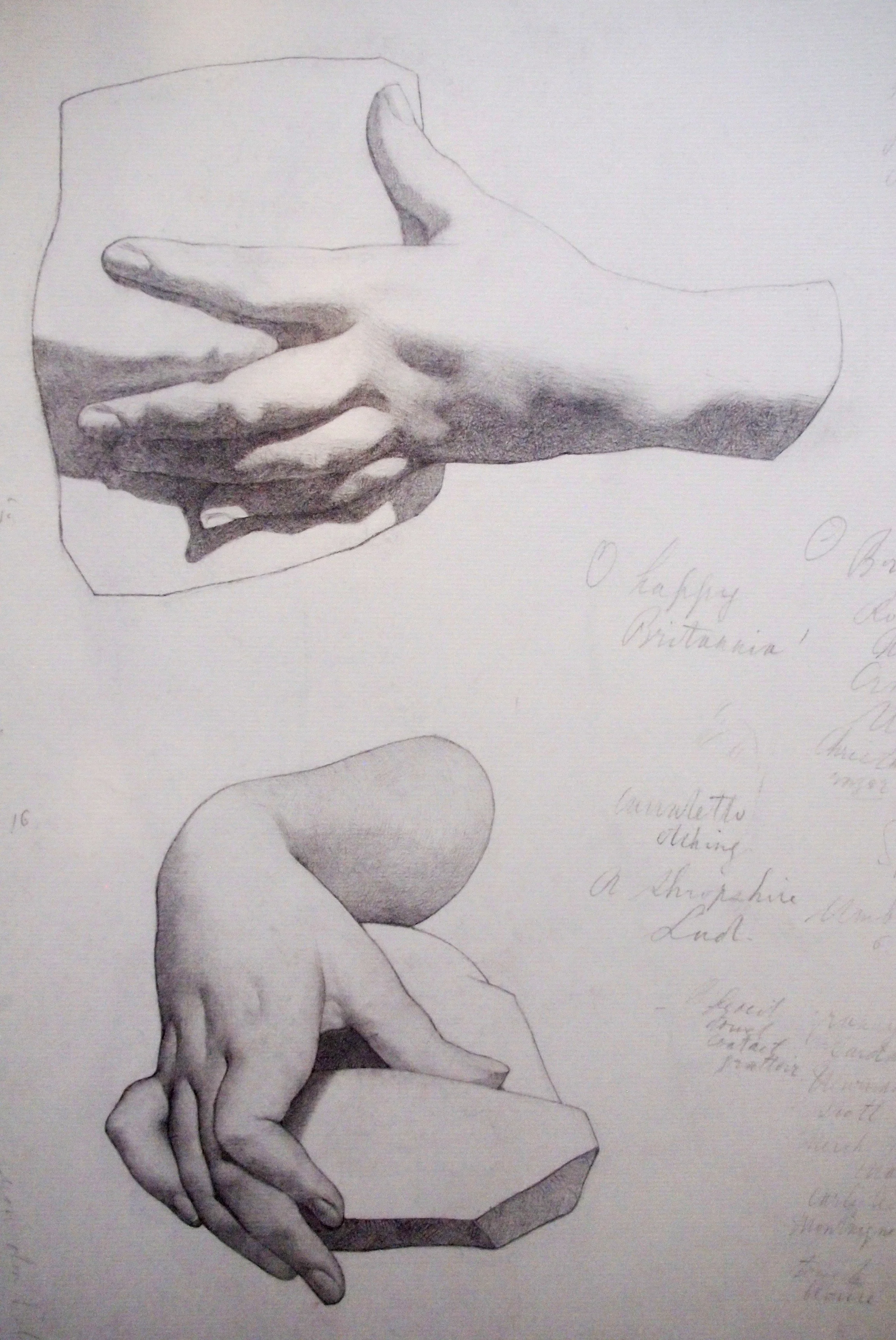
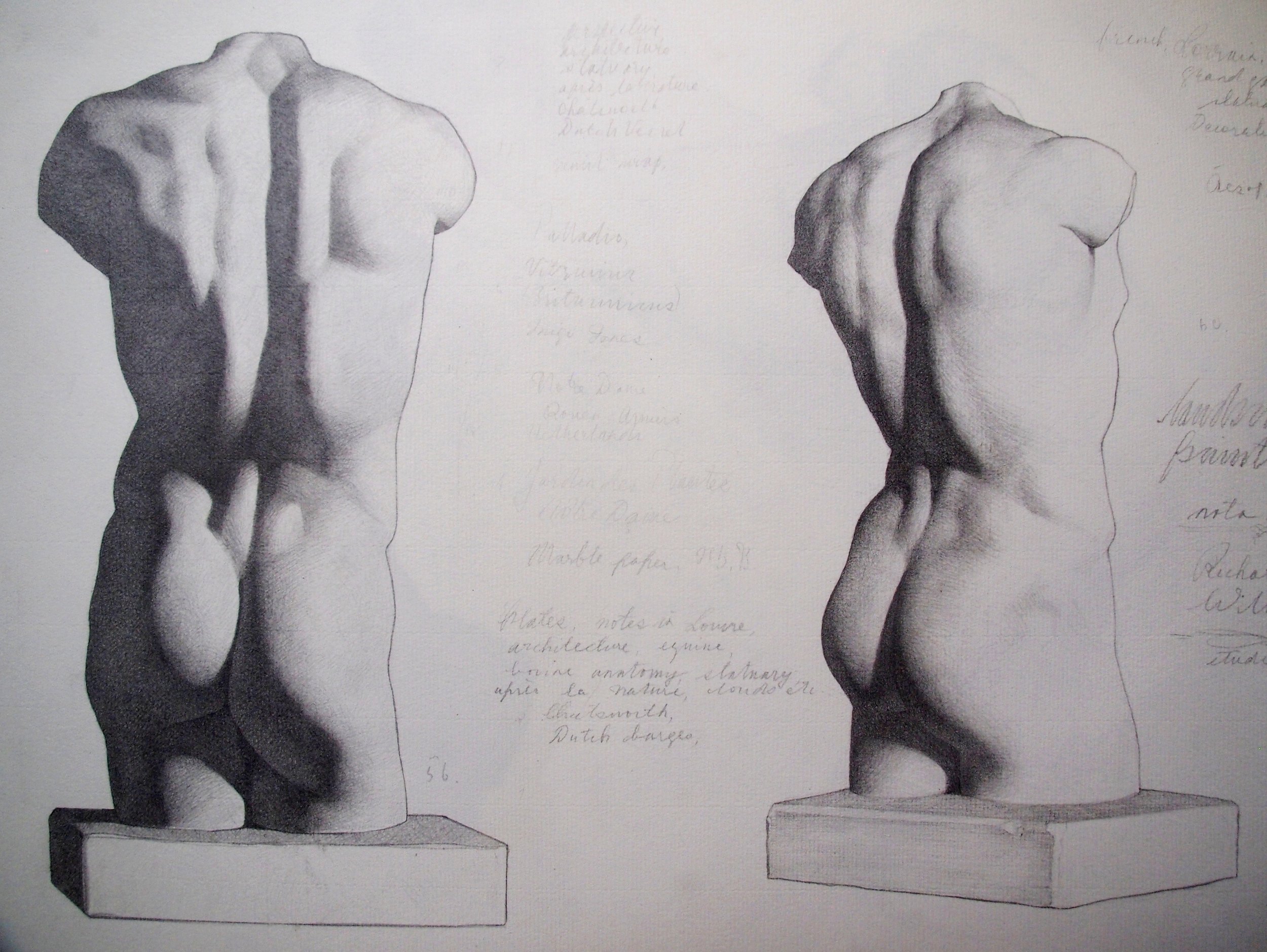
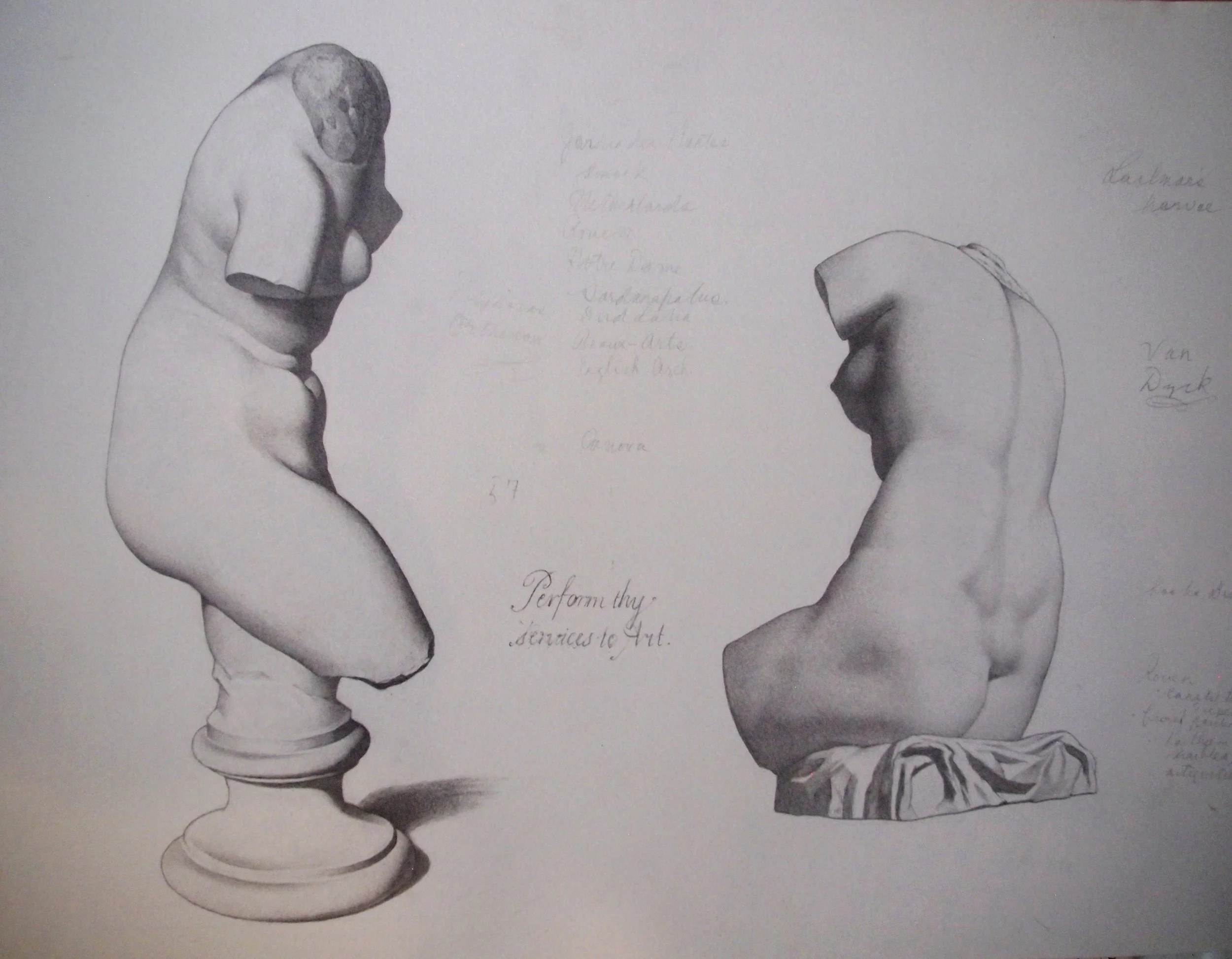
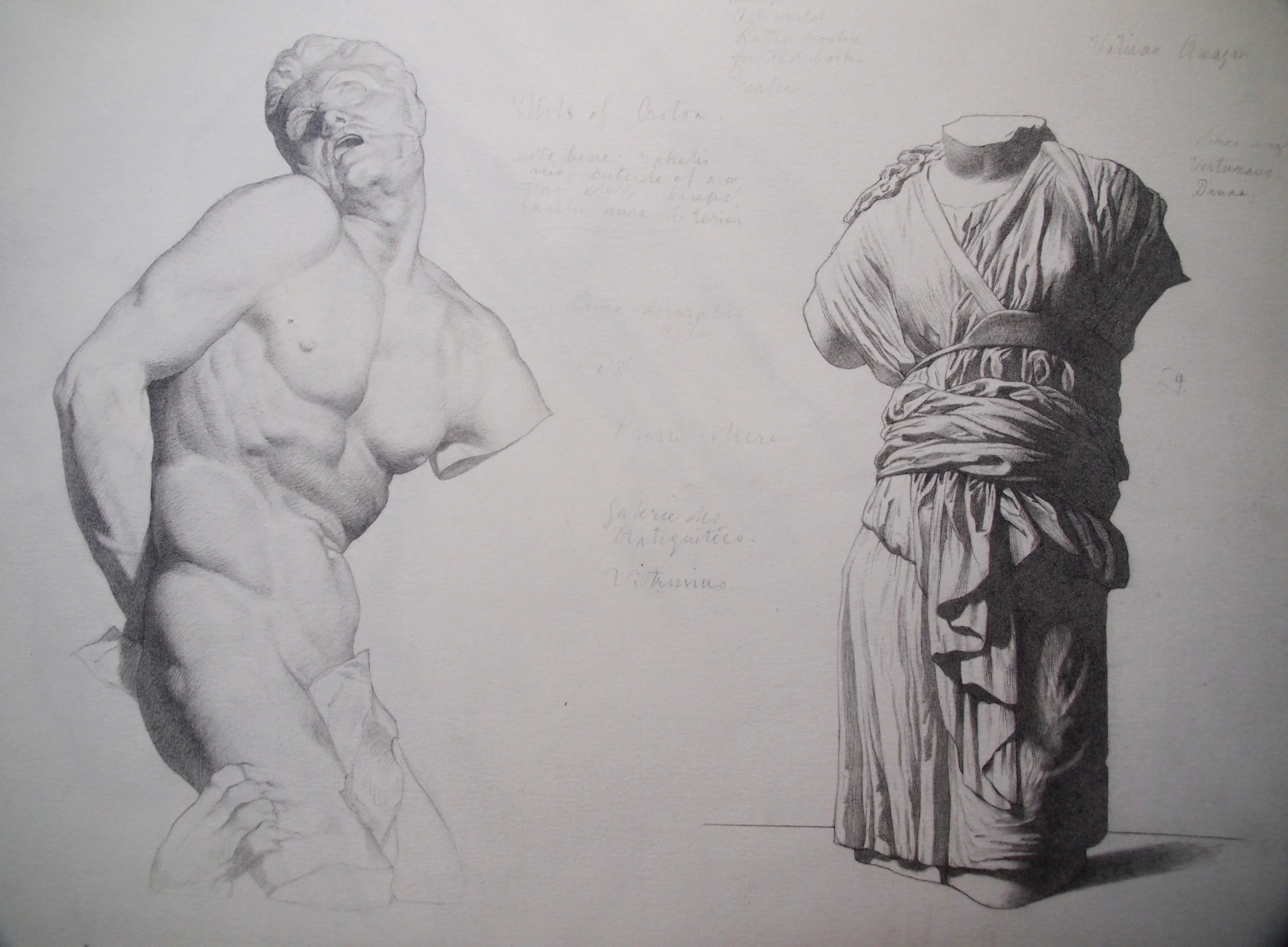
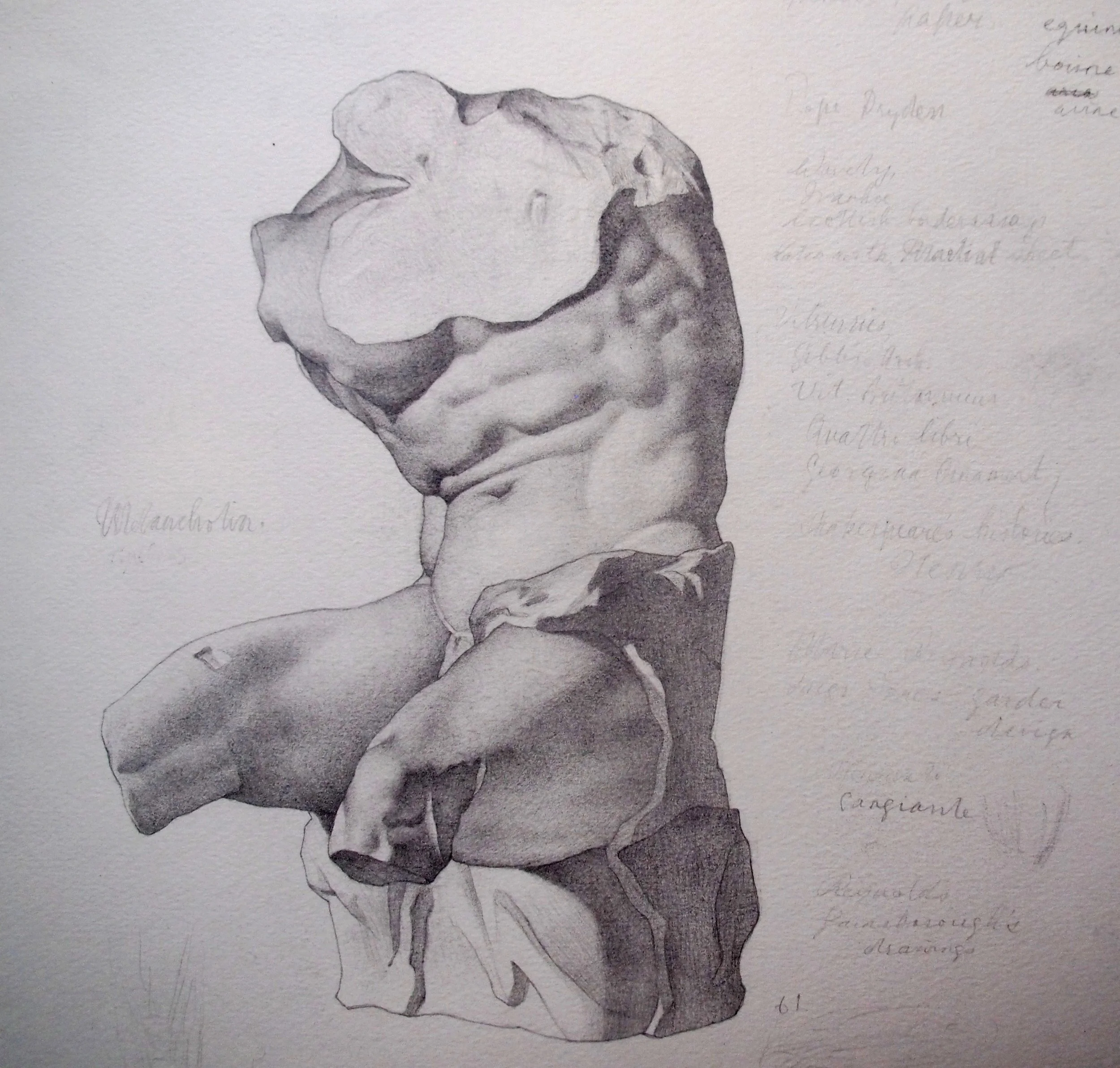
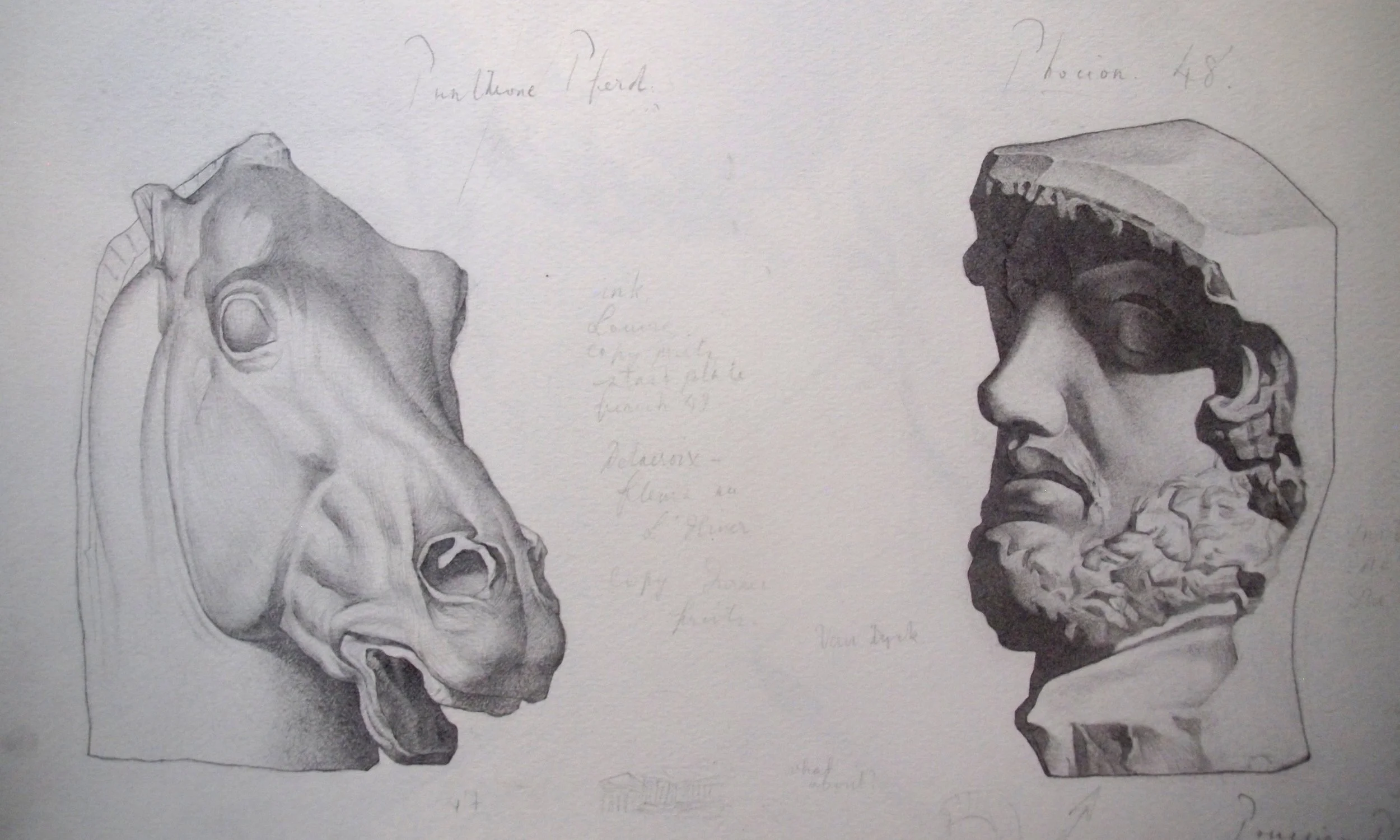
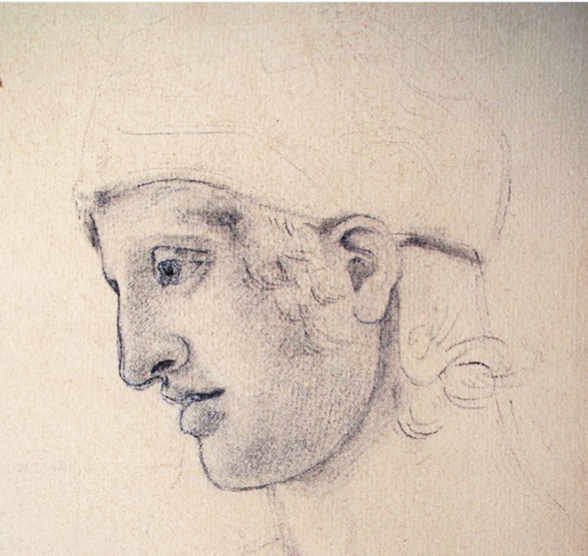
black chalk on paper with wash, 2013
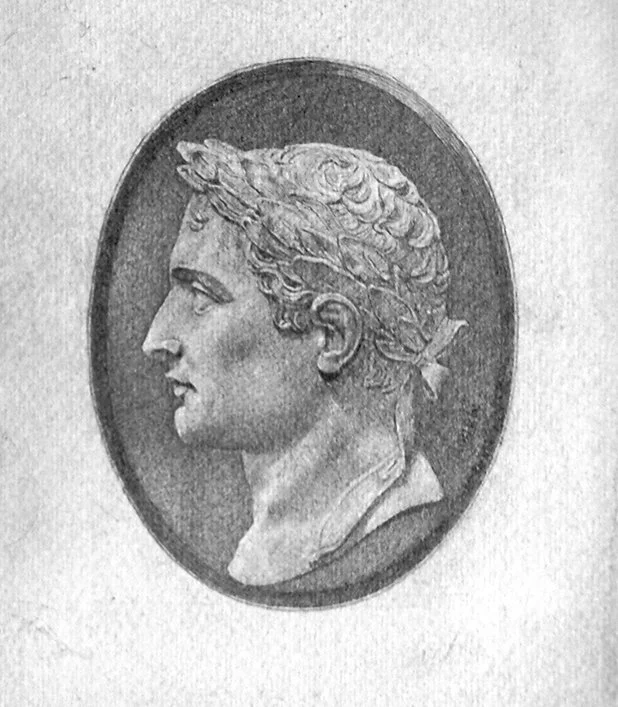
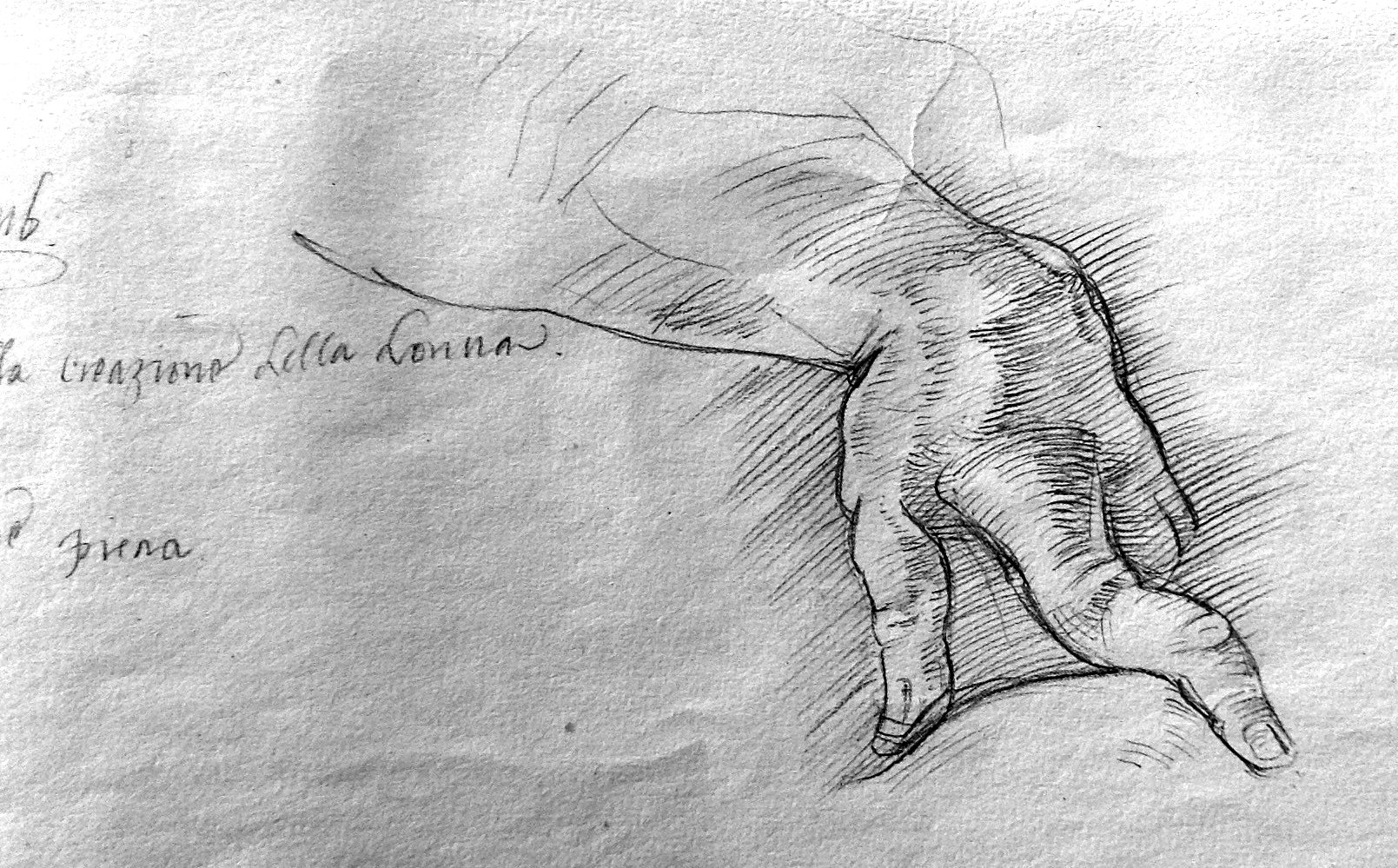
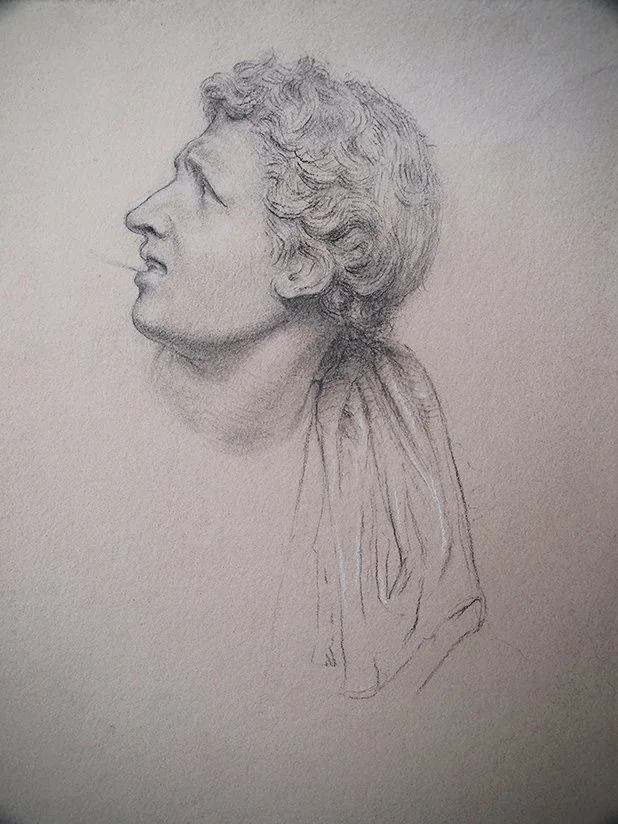
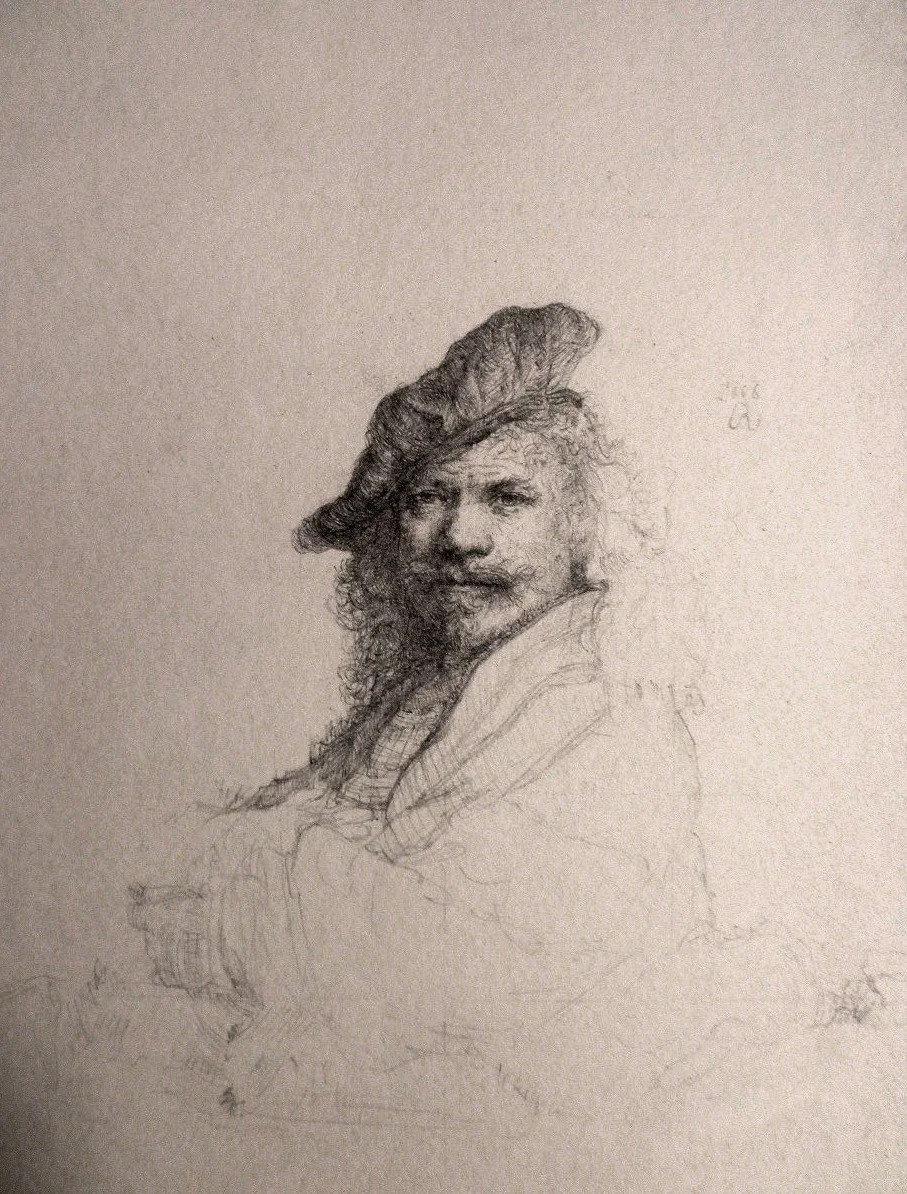
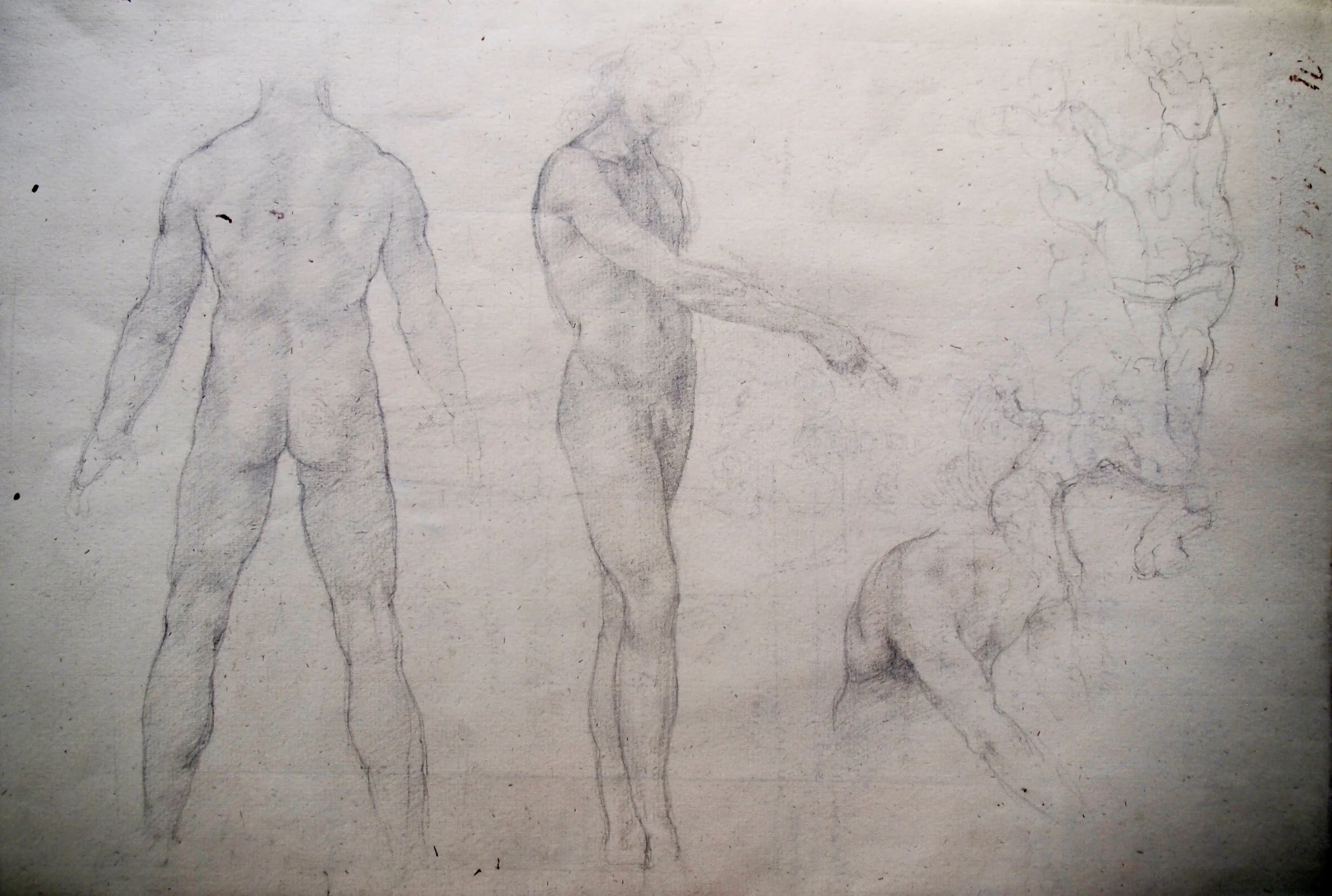
graphite on paper, 2013
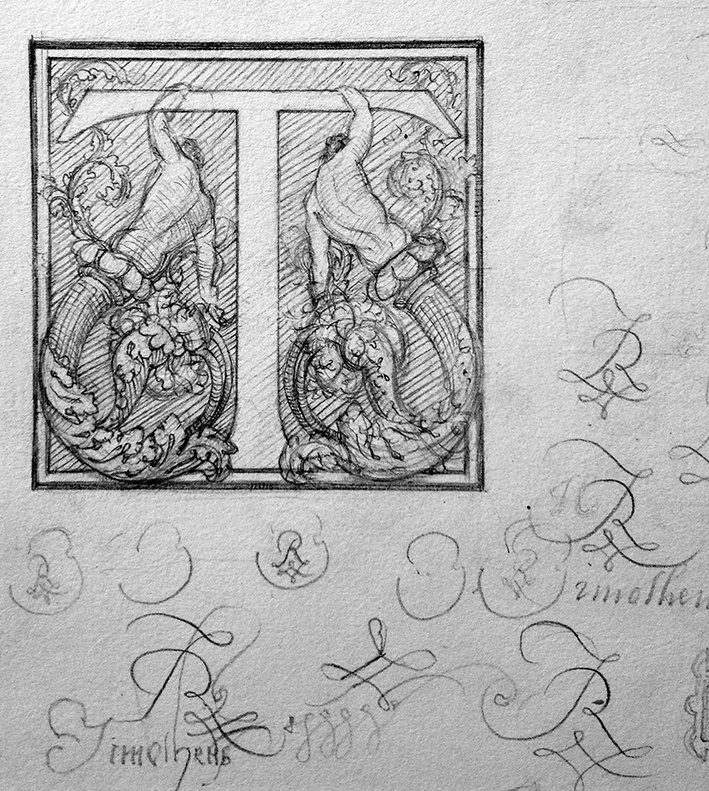
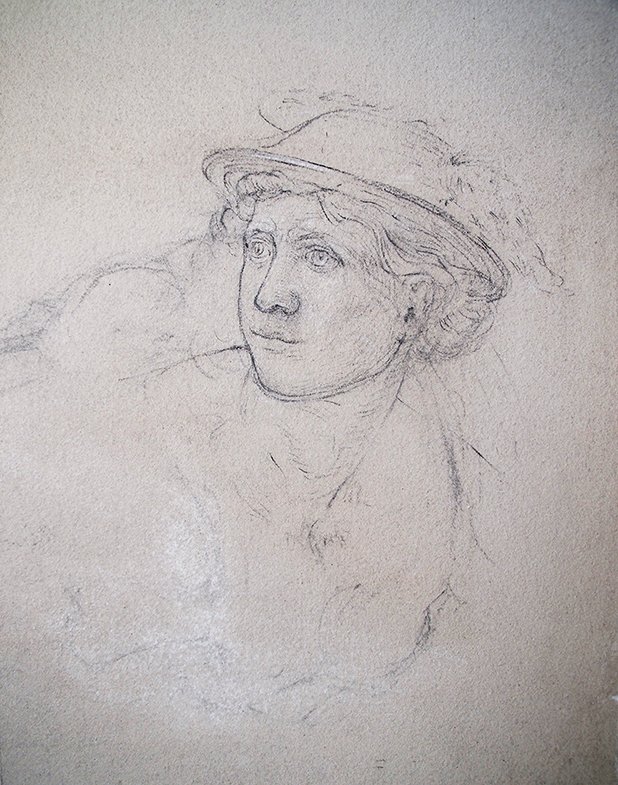
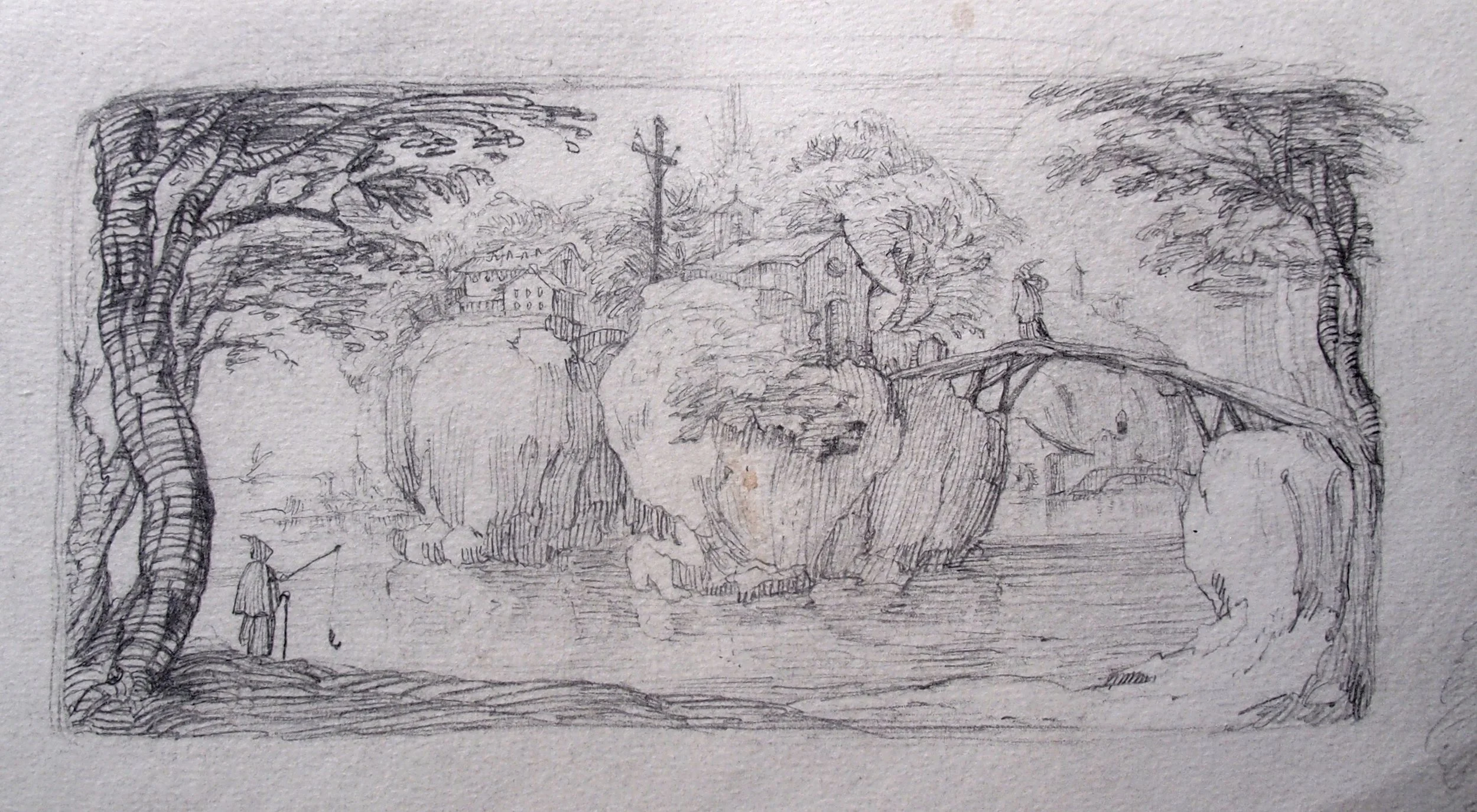
graphite on paper, 2015
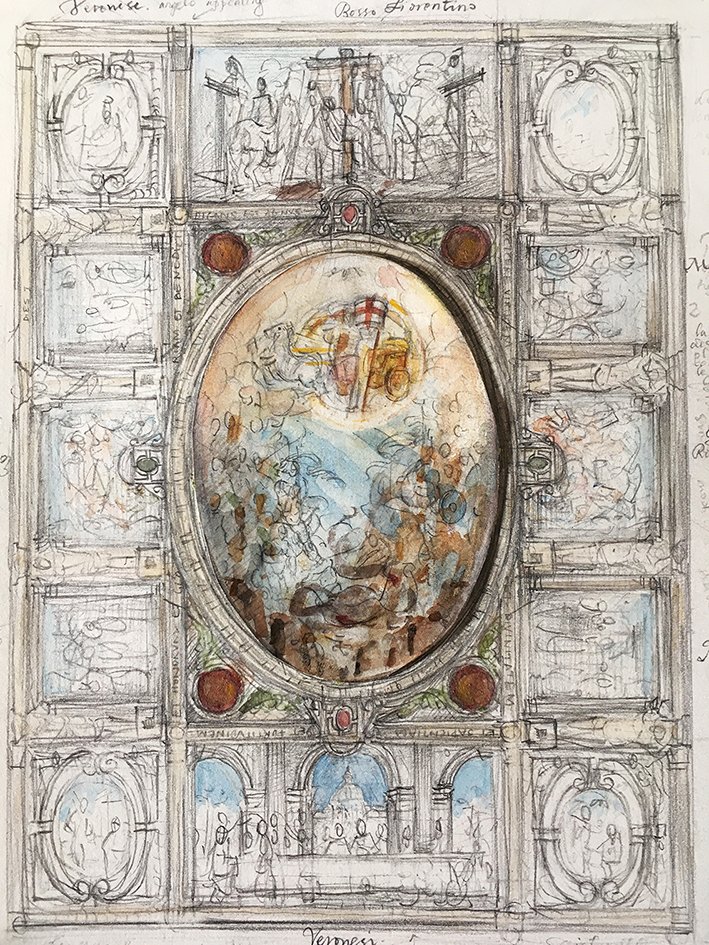
graphite and watercolour on paper, 2016
graphite on paper, 2017
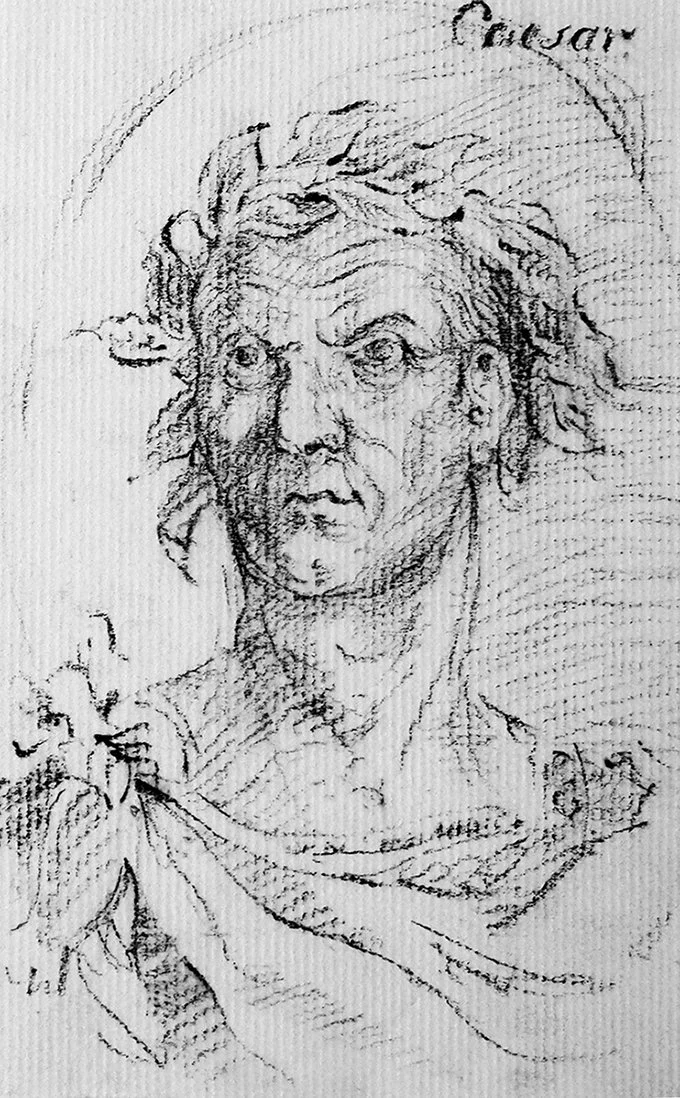
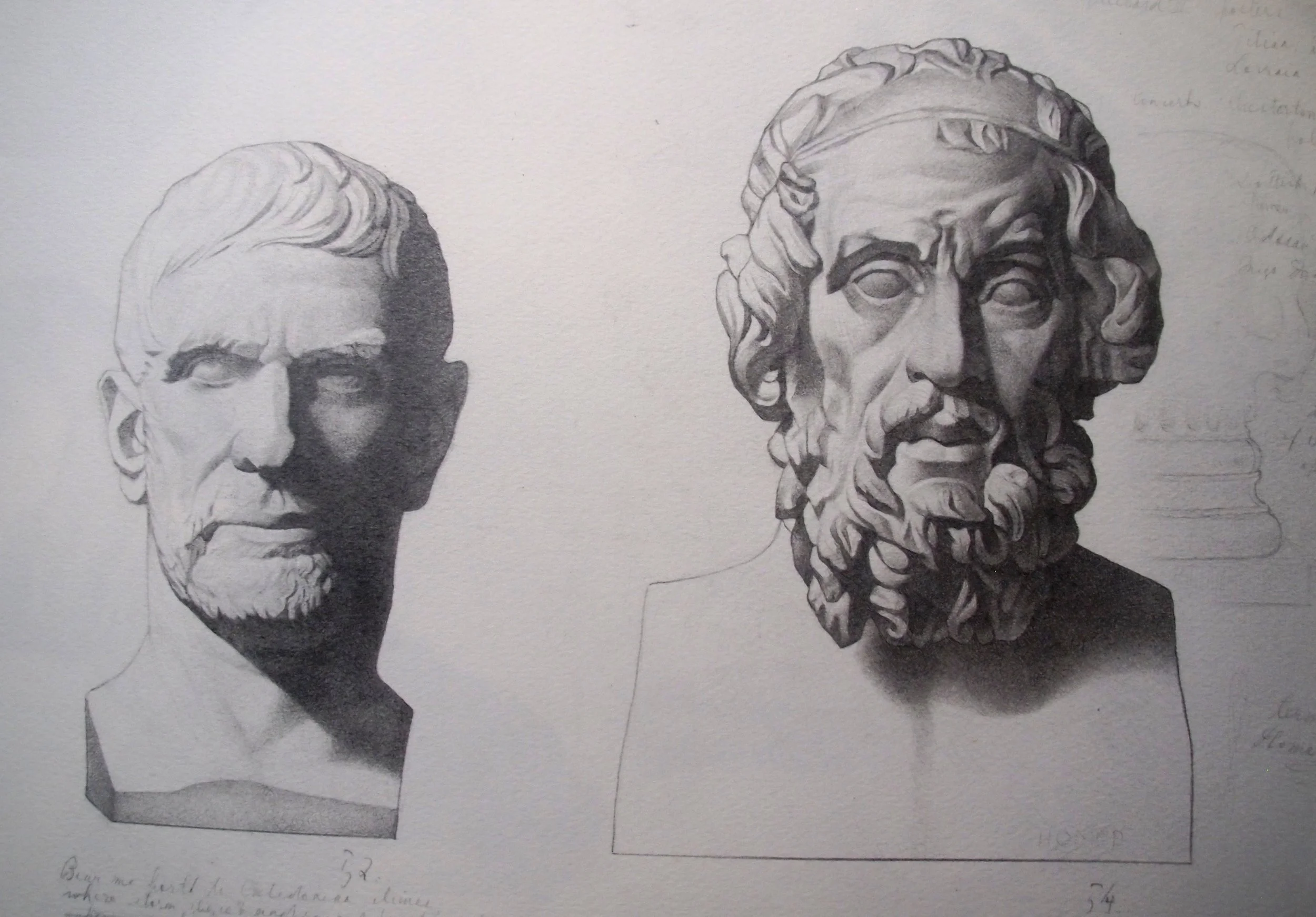
black chalk on laid paper, 2013
graphite on paper, 2015
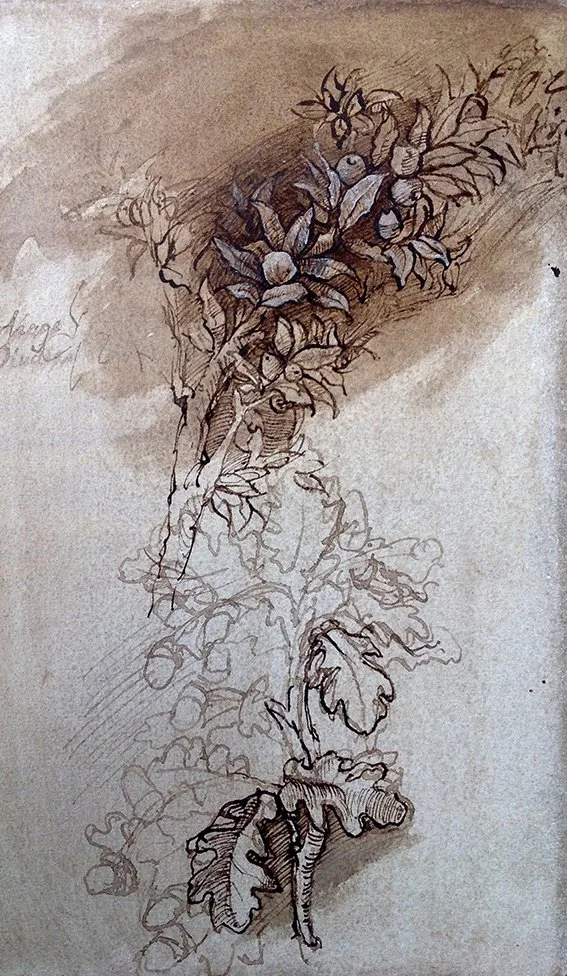
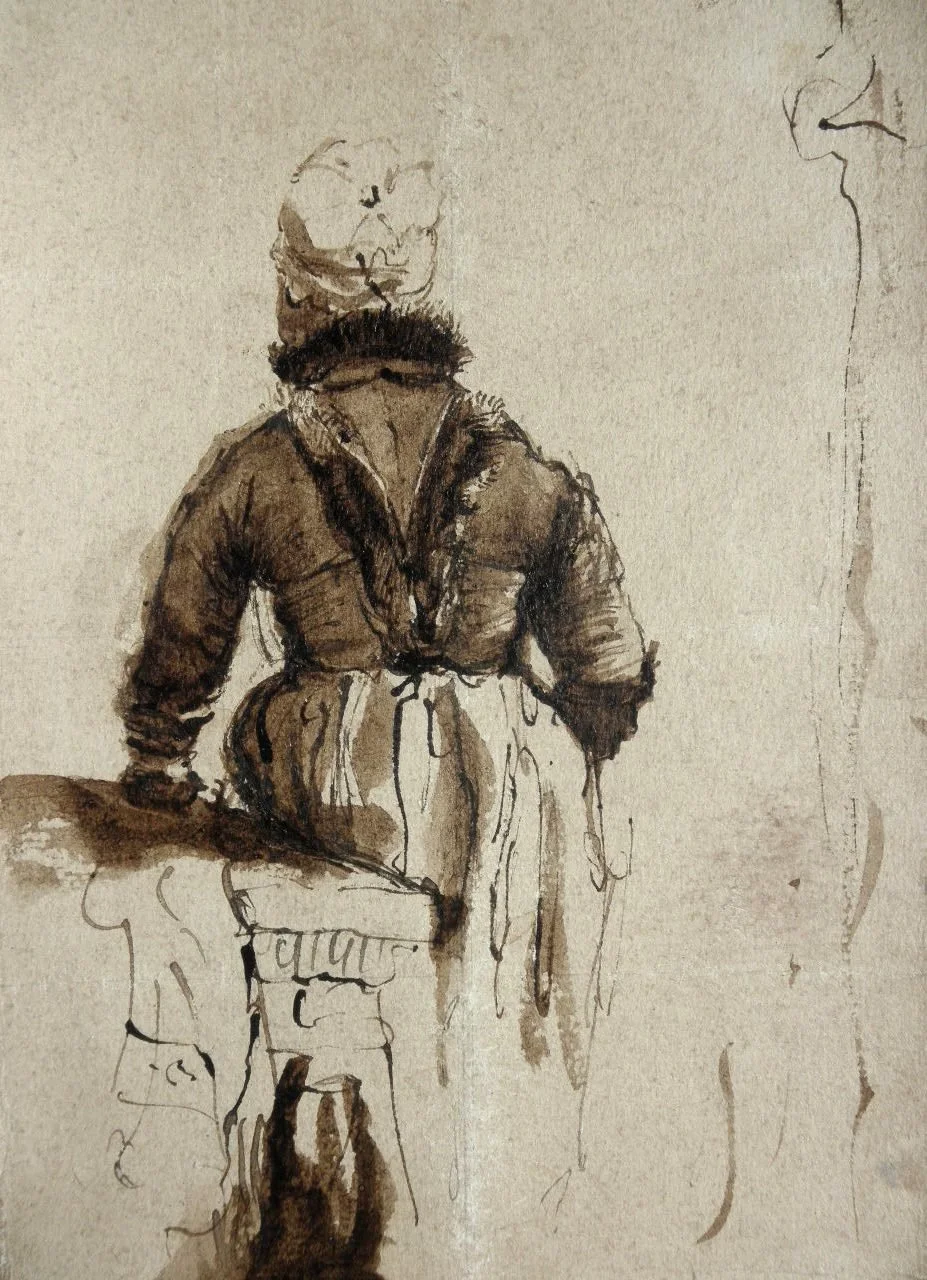
ink on paper with wash, 2012
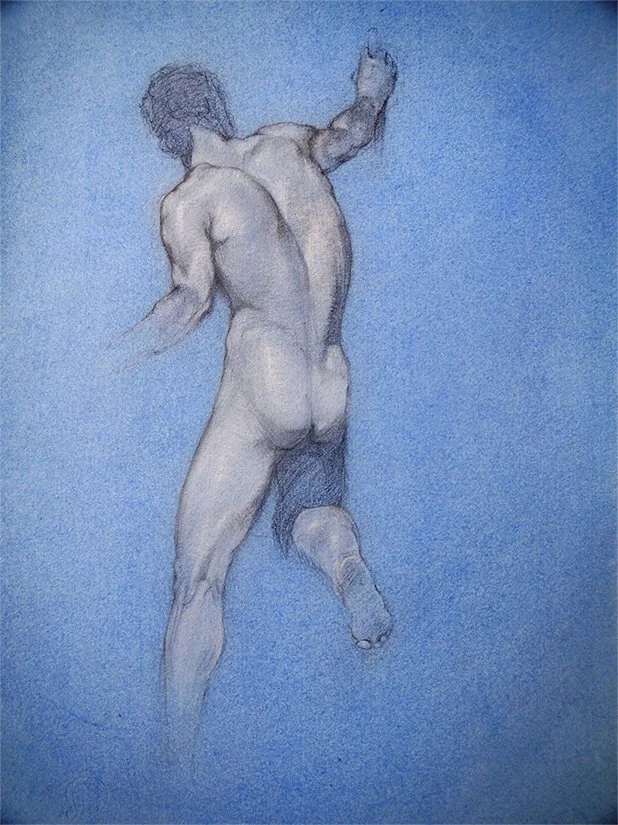
black and white chalk on paper with blue wash, 2012
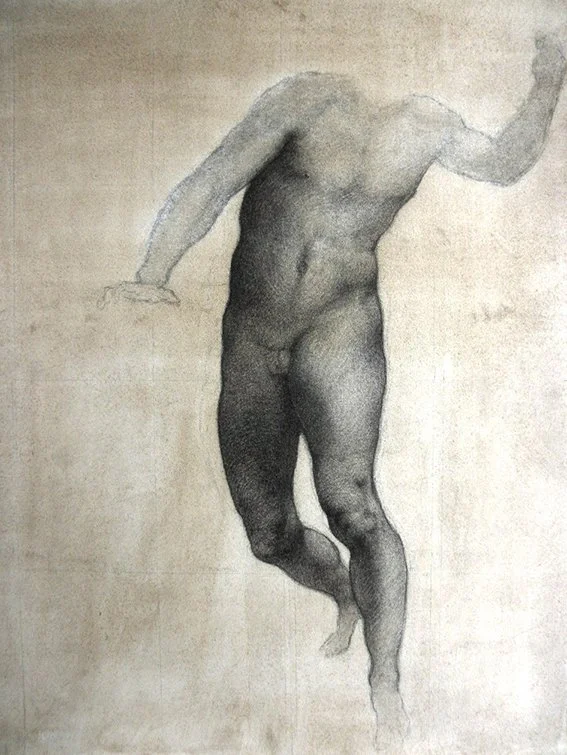
charcoal on paper with wash, 2012
black and white chalk on paper with wash, 2013
charcoal on paper with wash, 2013
graphite on laid paper, 2012
graphite on laid paper, 2012
graphite on laid paper, 2012
graphite on paper, 2012
graphite on paper, 2013
graphite on paper, 2013
graphite on paper, 2013
graphite on paper, 2012-13
graphite on paper, 2013
graphite on paper, 2013
graphite on paper, 2012
ink on paper with wash, 2012
graphite on paper, 2012
graphite on laid paper, 2012
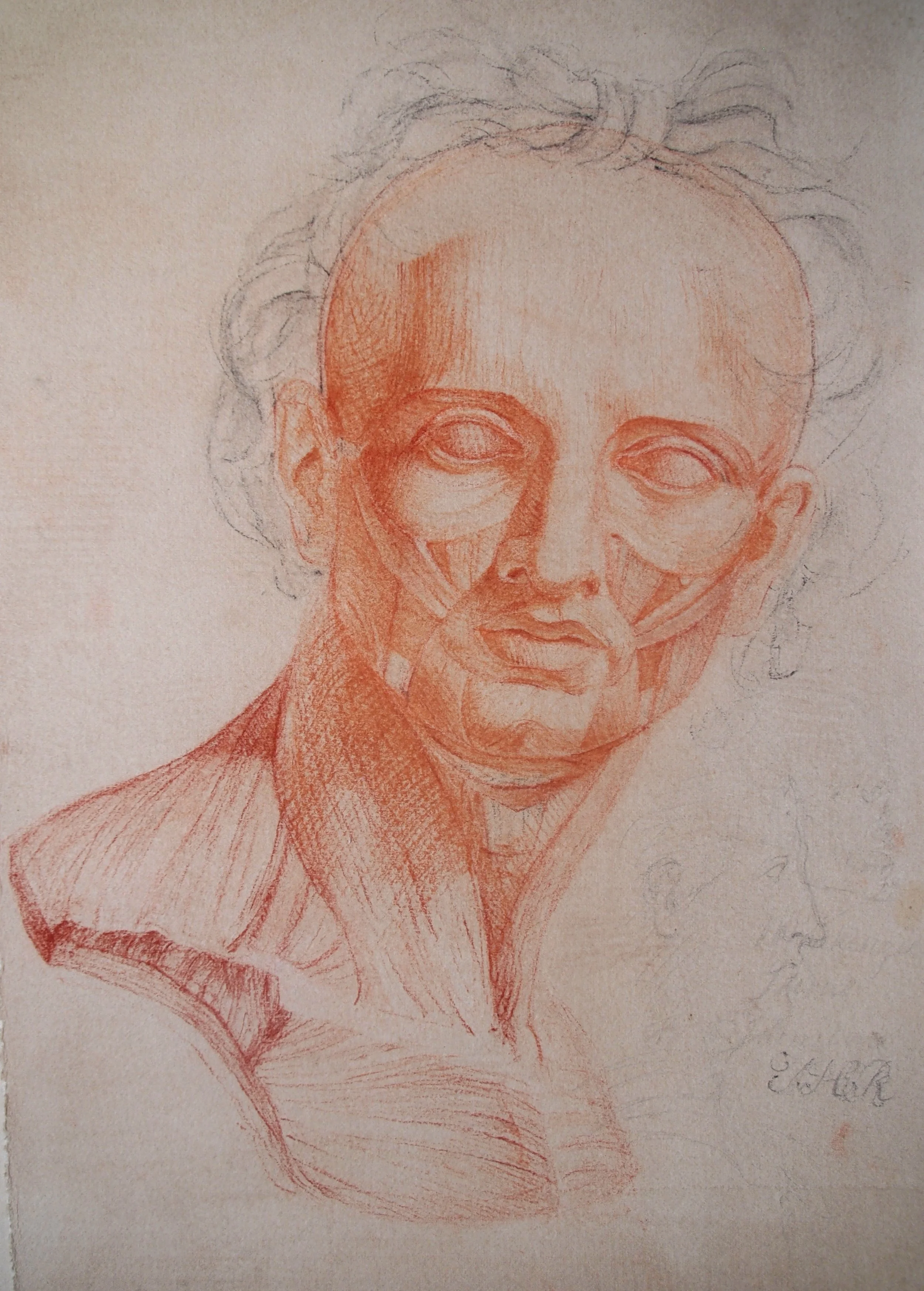
red and black chalk on paper with wash, 2013
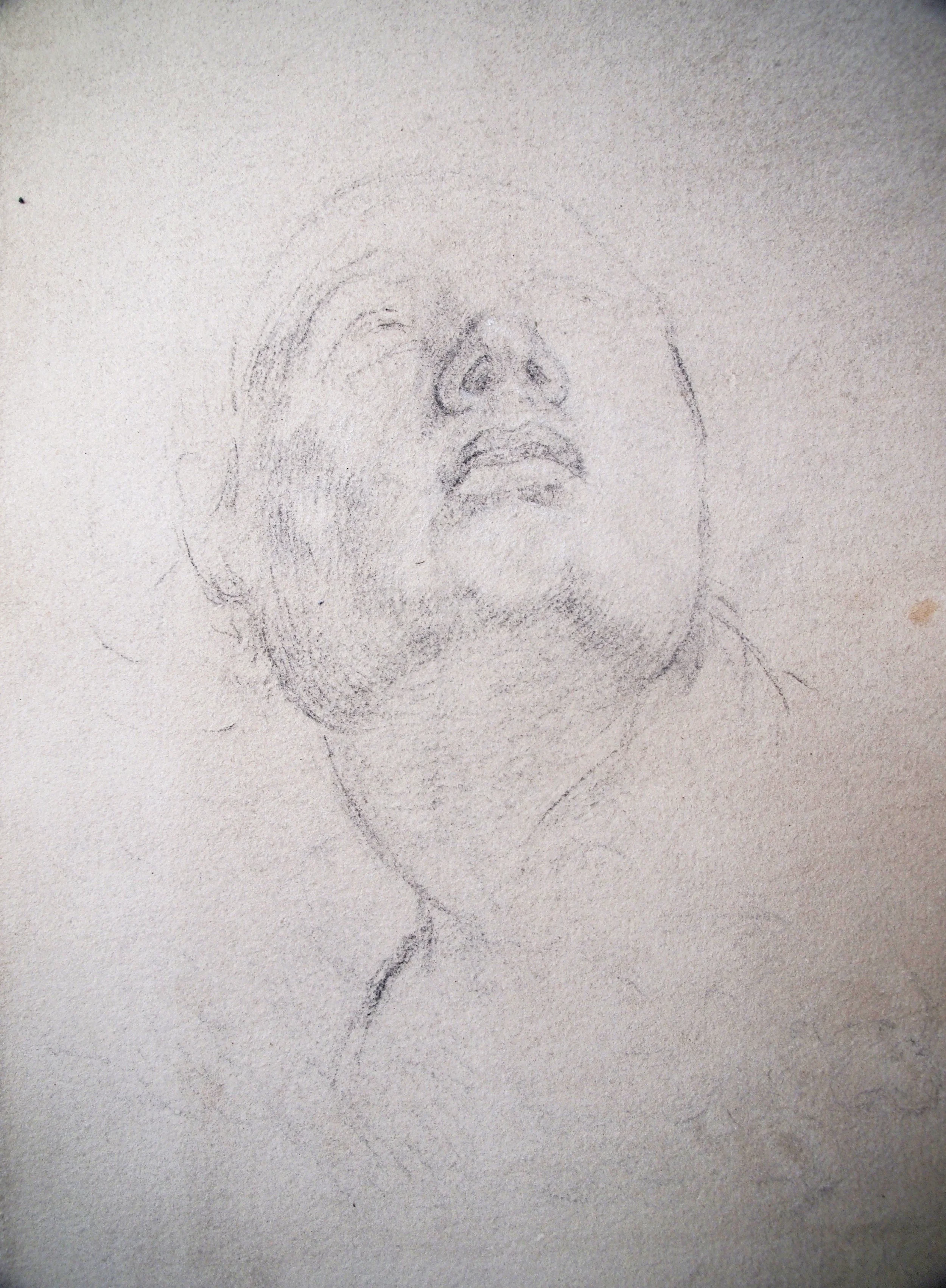
black chalk on paper, 2013
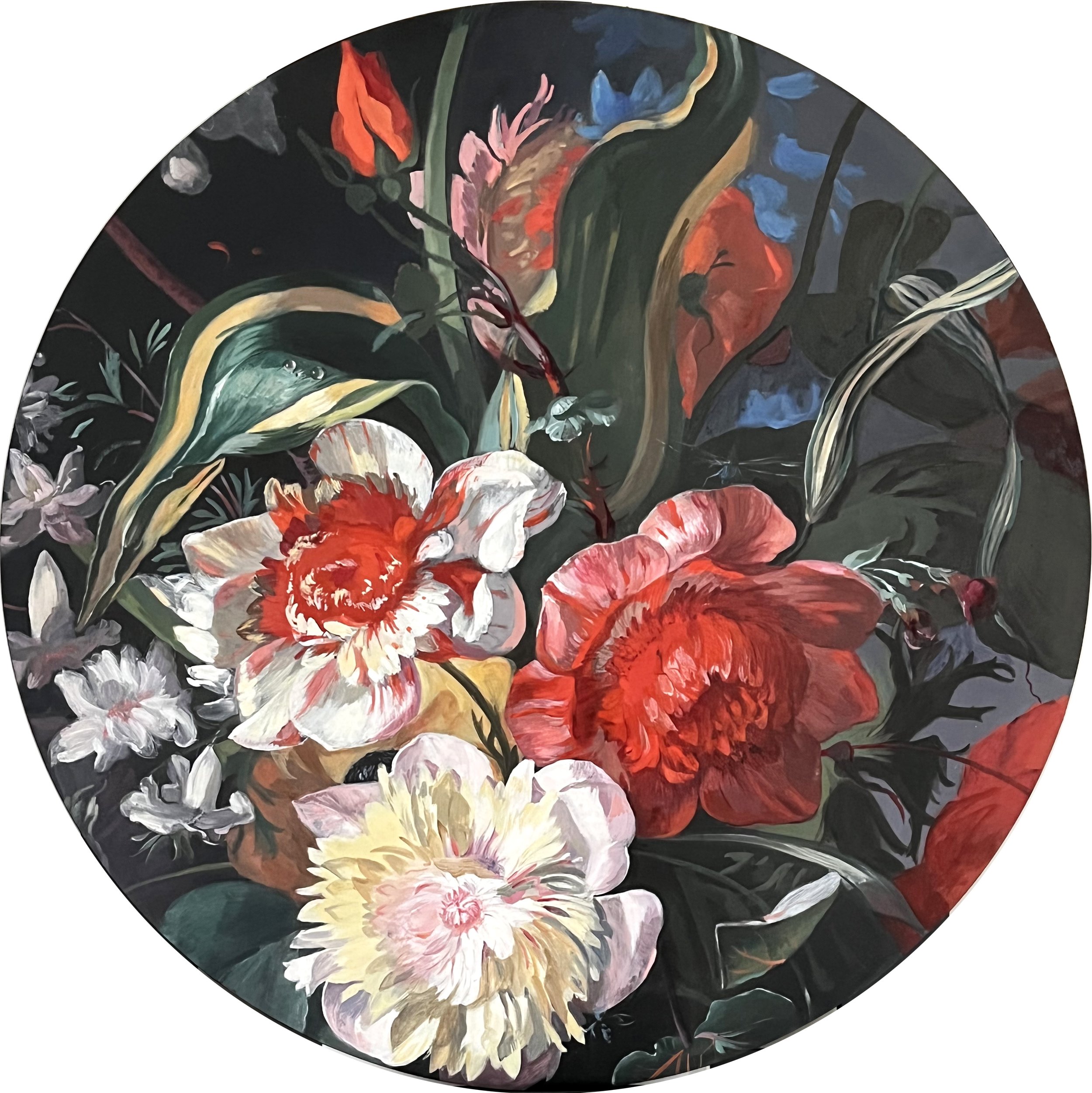
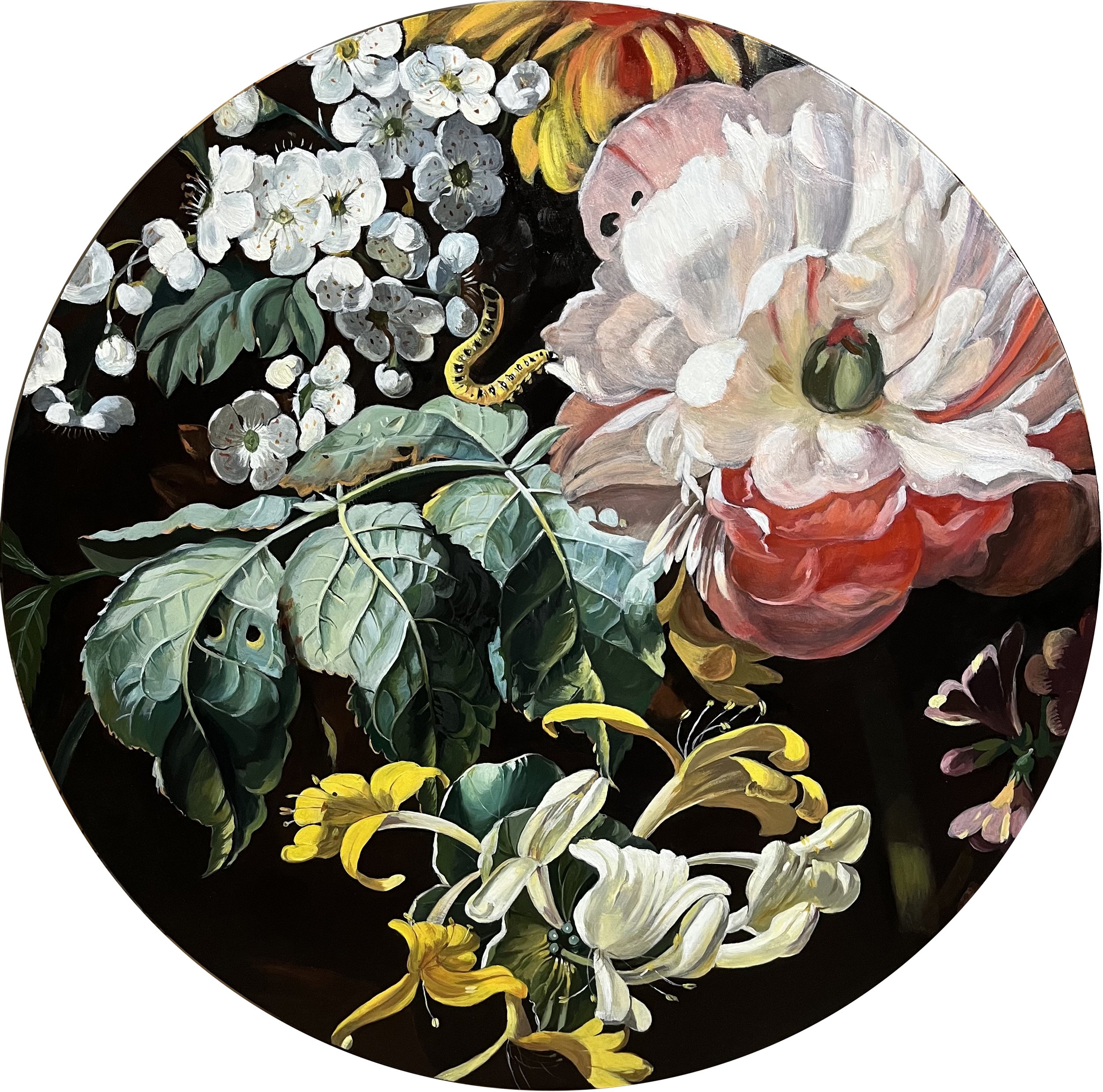
oil on panel, 59.7 x 59.7 cm, 2022
oil on panel, 59.7 x 59.7 cm, 2022
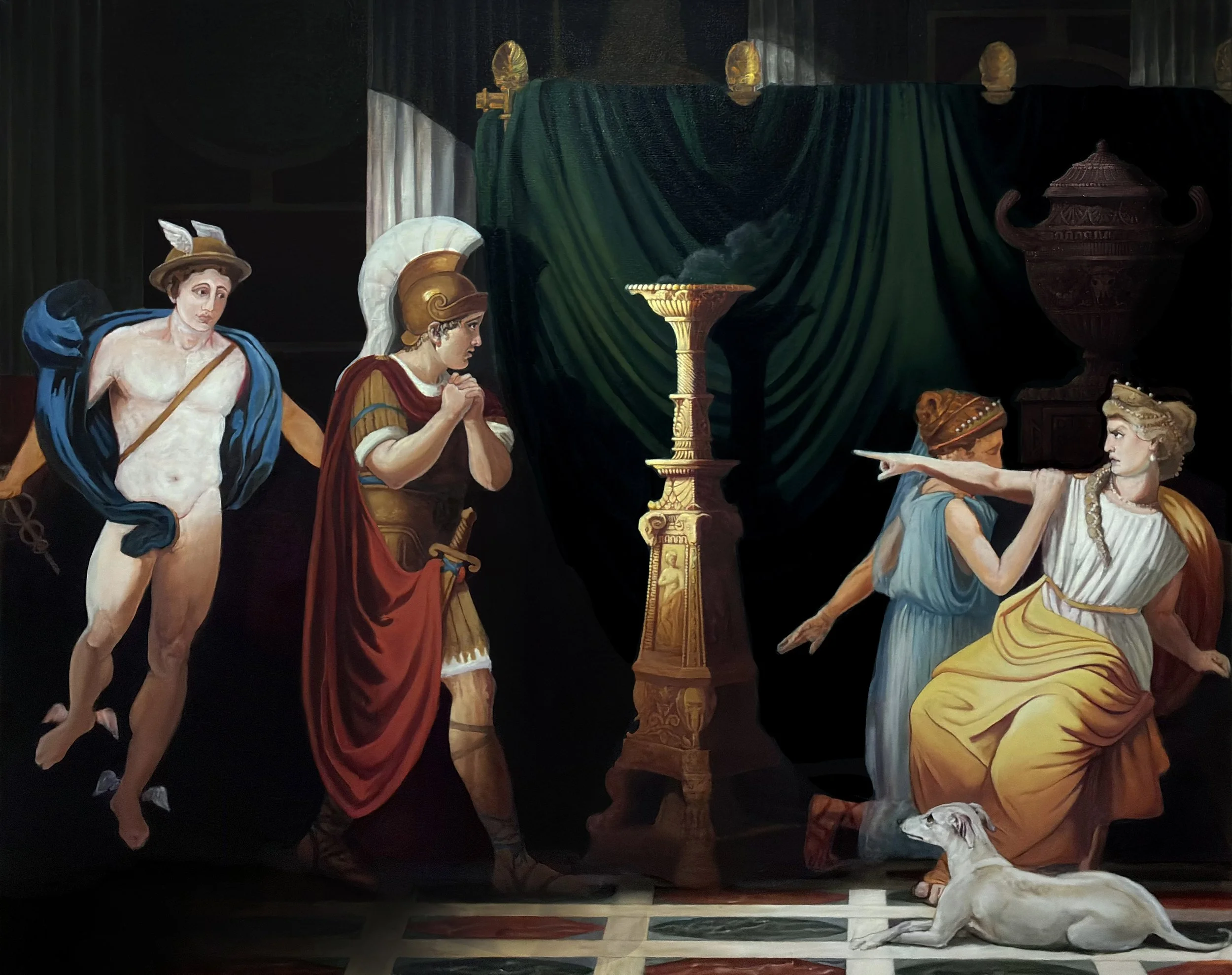
oil on canvas, 122.5 x 152cm, ongoing since 2023 (mid-way through process)
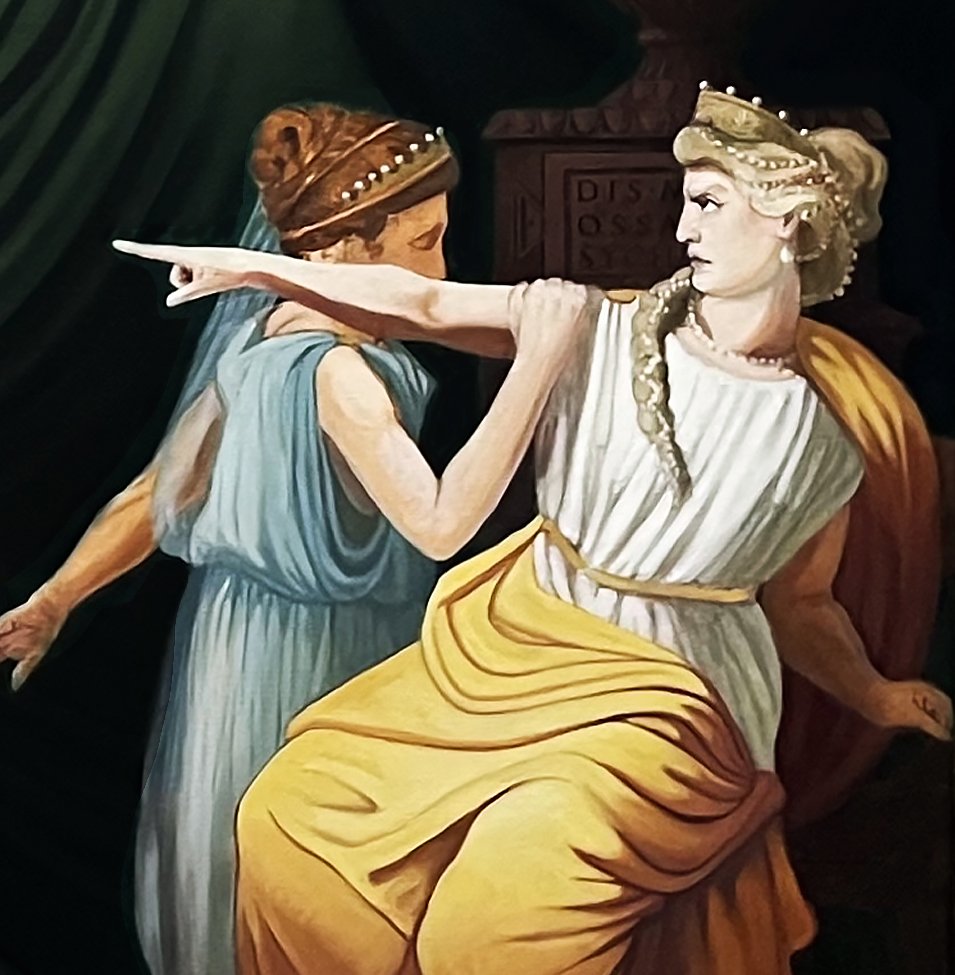
This scene depicts a moment from Virgil’s epic poem the Aeneid. The Carthaginian queen Dido castigates her lover, the Trojan hero Aeneas, for choosing to leave her at the behest of the gods in pursuit of his duty to establish the Trojan race in Italy after defeat in the Trojan War. The divine injunction is represented by the presence of Mercury on the far left. Although Mercury is not actually present in this scene in the poem, his manifestation here is a reminder that Aeneas’ compulsion to leave Dido and continue on his quest stems from Jupiter’s sovereign command (hinted at by a wall-painting of the god upper centre). Dido’s severe, pointing gesture suggests her caustic denunciation of the hero’s excuses, dismissing him as she scornfully utters those terse yet immortal imperatives: ‘Go, follow after Italy on the winds, seek out your kingdoms across the waves!’
Dido’s tragic isolation at this moment is made all the more poignant by the presence of the porphyry urn behind her, whose morbid contents are indicated by the inscription: ‘DIS MANIBUS OSSA SYCHAEI’ (‘To the shades of the Underworld, the bones of Sychaeus’). Sychaeus was Dido’s first husband, the king of Tyre, who was murdered by his jealous brother Pygmalion. Dido fled Tyre and founded Carthage, vowing to her dead husband never to remarry. When she fell in love with Aeneas, she broke those vows. Now, admonishing her lover to leave her before the remains of the very husband she vowed never to betray in widowhood, her sense of abandonment in light of her eventual downfall is lent all the more pathos.
Indeed, in the centre of the painting, smoke rises from the dying embers of a gold candelabrum that once burned with the flames of love, and which fails to rekindle what little affection that remains between them. Instead, the lamp’s role as a compositional divide merely serves to alienate the pair from one another all the more, separating them from any hope of reconciliation, even as Aeneas steps forward to reclaim what little dignity and to save whatever reputation he has left in Dido’s eyes.
On one side of the candelabrum, a statuette of the goddess Venus glints towards Aeneas, her son, and who in part manipulated his situation to keep him distracted with Dido, along with her rival Juno – an avowed enemy of the Trojans and who actively seeks to stop Aeneas from reaching Italy - whose figure stands in a niche on the shadowy side of the candelabrum, facing Dido. Once her protector, the goddess has now neglected the queen and allowed her to become collateral damage in the divine plans of her husband Jupiter.
The aesthetic of the painting is underpinned by neoclassical lines and bright colours, and a progressive narrative told through a shallow space, typical of late 18th and early 19th century French painting that harked back to Greco-Roman vase painting and friezes.
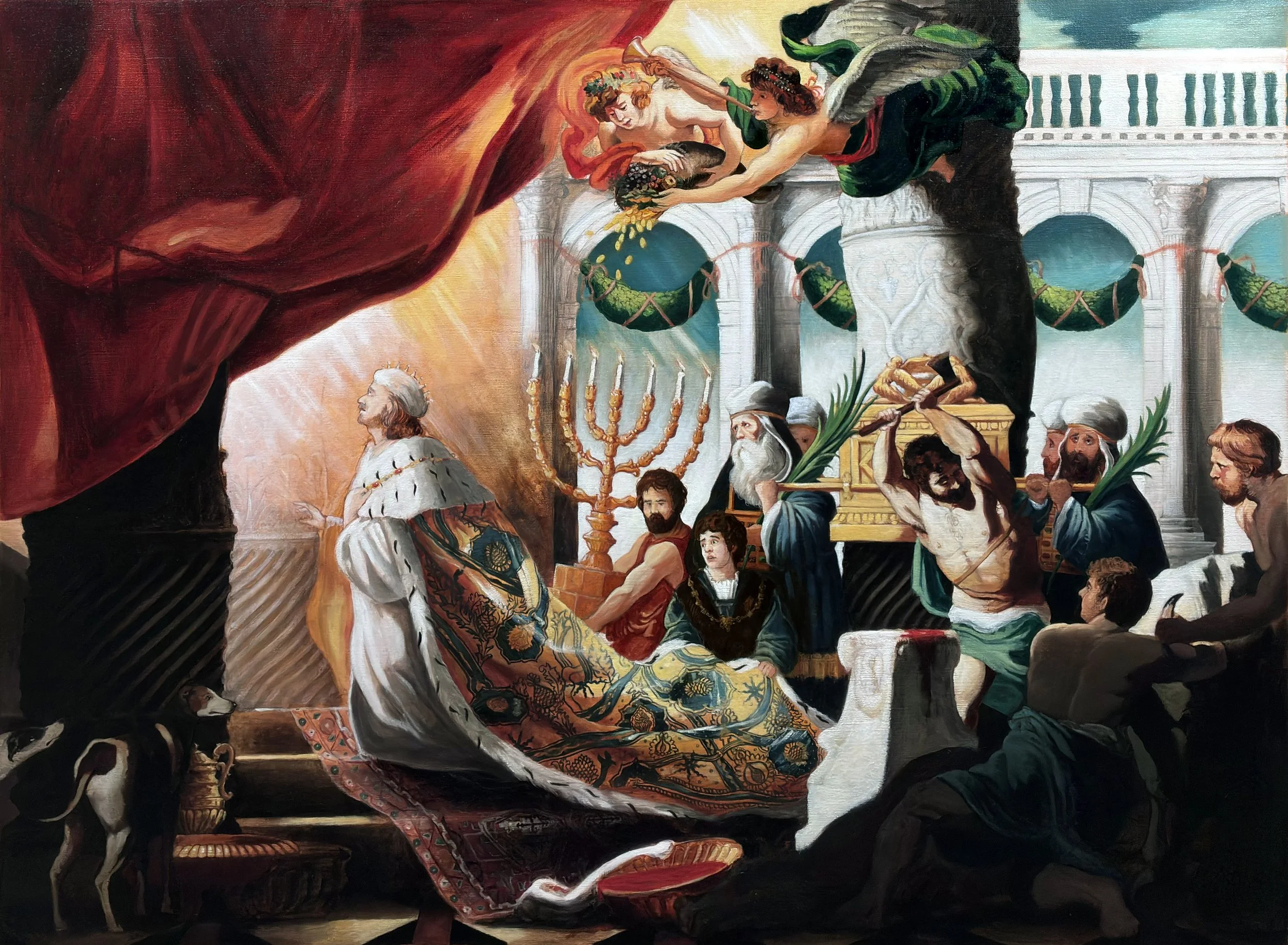
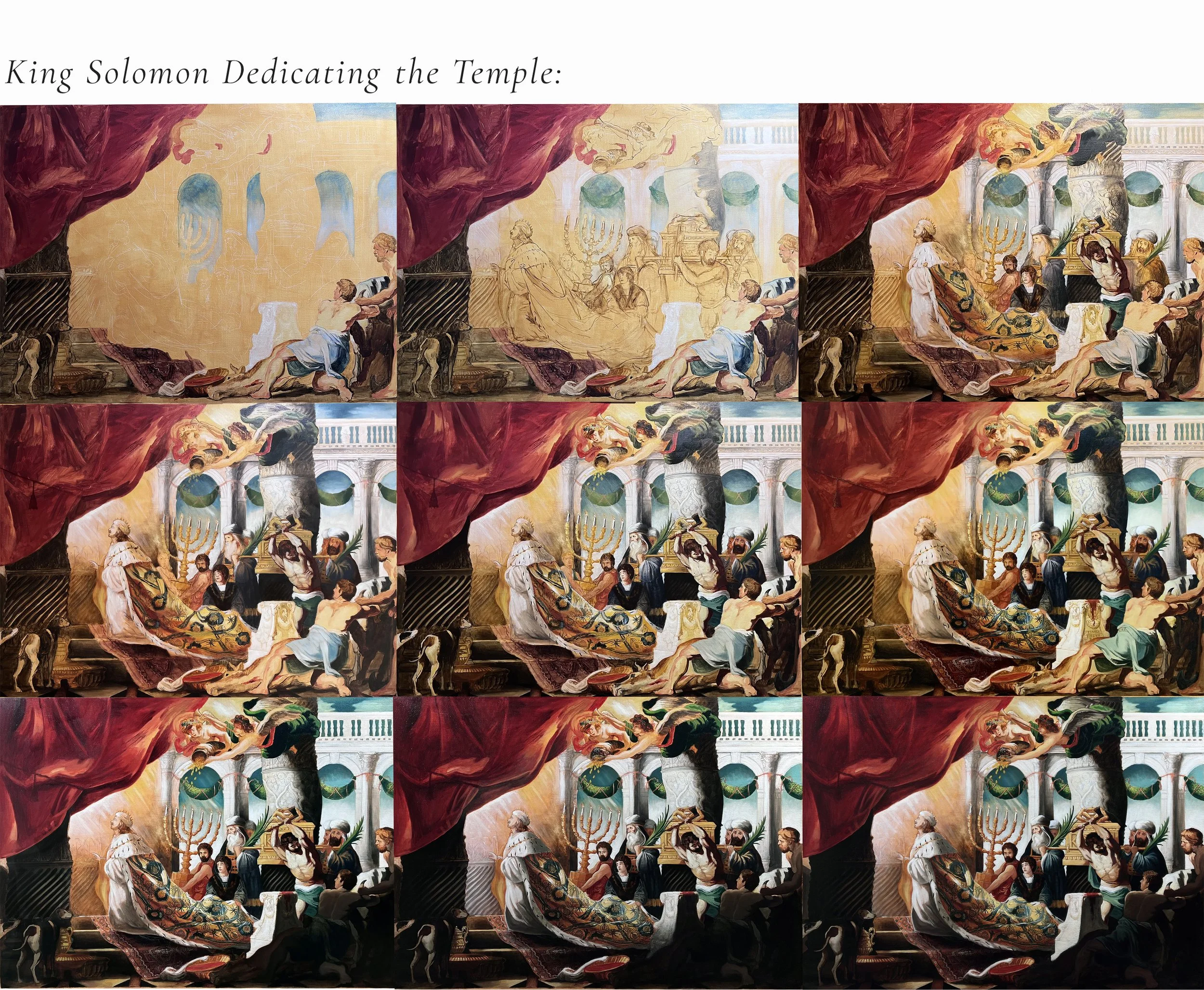
oil on canvas, 119.5 x 88 cm, begun in 2022 (now applying final details)
This painting is a love letter to Rubens, distilling many of the lessons I have learned from the painter’s use of composition and colour, as well as the occasionally borrowed figure or prop!
The design itself is entirely original. It depicts King Solomon lost in the throes of divine rapture as he kneels before the newly built temple in Jerusalem. A hand lightly touches his heart in a gesture of ecstatic reverence, his eyes rolled heavenward as he utters his prayer of dedication, as recounted in the First Book of Kings.
The painting’s Baroque style is intended to honour the spirit of the biblical scene, characterised by an air of elation and regal pomp. The sense of theatre created by the interplay of light and shadow, colour and figural movement was drawn especially from Rubens’ colourful eruptions of Counter-Reformation extravagance, as seen in his Marie de’ Medici Cycle, Decius Mus Cycle and Eucharist Cycle.
The painting reads from left to right, meeting the opposite direction of the procession. The large sweep of red drapery covering a colossal column on the left masks a radiant display of divine glory, which bathes the king in a golden white light. The eye is then led down Solomon’s robe: a waterfall of rippling gold damask and embroidered turquoise silk, intermingling an ecclesiastical griccia pattern with a carpet of pomegranates. A page boy, caught in equal rapture, holds up the train of the robe’s heavy, ermine-lined hem.
A burly attendant carries the menorah into the temple in the background; the Levitical priests solemnly process, bearing the Ark of the Covenant; in the foreground at right, three men sacrifice an ox with the wide swing of an axe (borrowed from Rubens’ Massacre of the Innocents and his Decius Mus Consulting the Auspices); and flying overhead, two angels, one blowing a trumpet, survey the general splendour of the scene, and shower the king with gold from a cornucopia (borrowed from Rubens’ Coronation of Marie de’ Medici).
The architecture appropriately utilises the so-called Solomonic column with its undulating helical lines to divide up the picture plane, as well as a colonnade of arches adorned with swags of oak leaves hung from Composite capitals to create a sense of rhythmical grandeur that complements the procession’s ascent towards the Holy of Holies.
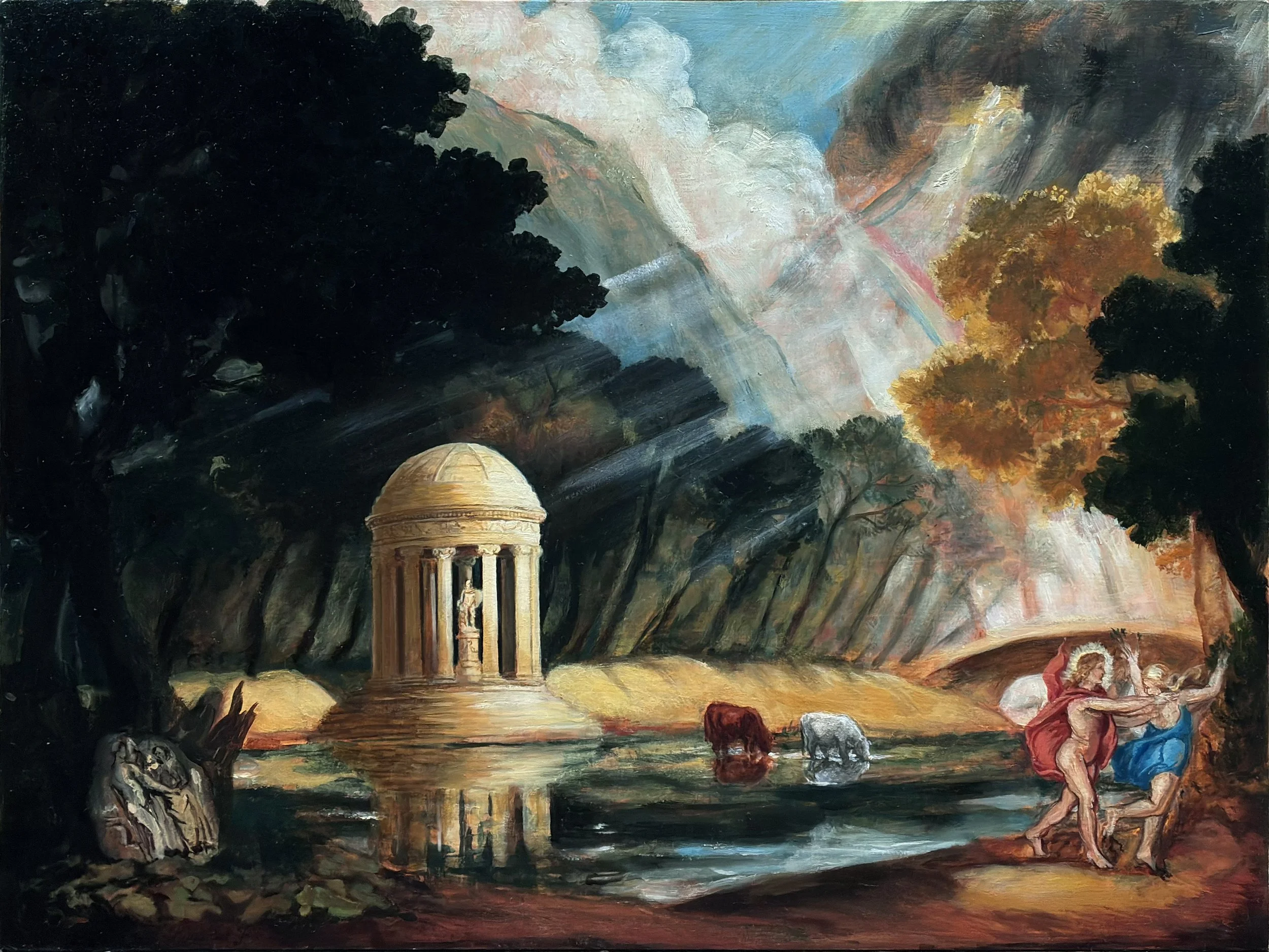
oil on panel, 30.5 cm x 40.5 cm, begun in 2024 (now applying final details)
This is a small-scale study, still rough in places, which borrows from the compositional practices found in 18th century landscape paintings.
The god Apollo pursues the hapless young Daphne, whose prayers for aid from Jupiter, hinted at by the sudden flash of lightning top right, result in her turning into a laurel tree to avoid Apollo’s advances. Her aid, sadly, is drastically permanent.
The river winds its way beneath distant mountains, evoking perhaps the Vale of Tempe - Apollo’s sacred ground in Thessaly and where this episode in Ovid’s Metamorphoses concludes. The cows in the river further point to the presence of the sun god. The rotunda in the distance (modelled after the Venus Rotunda at Stowe) ironically houses a statue of the Apollo Belvedere.
The Apollo and Daphne group are adapted from Rubens’ 1636-1638 treatment of the couple in a painting for Philip IV’s hunting lodge.
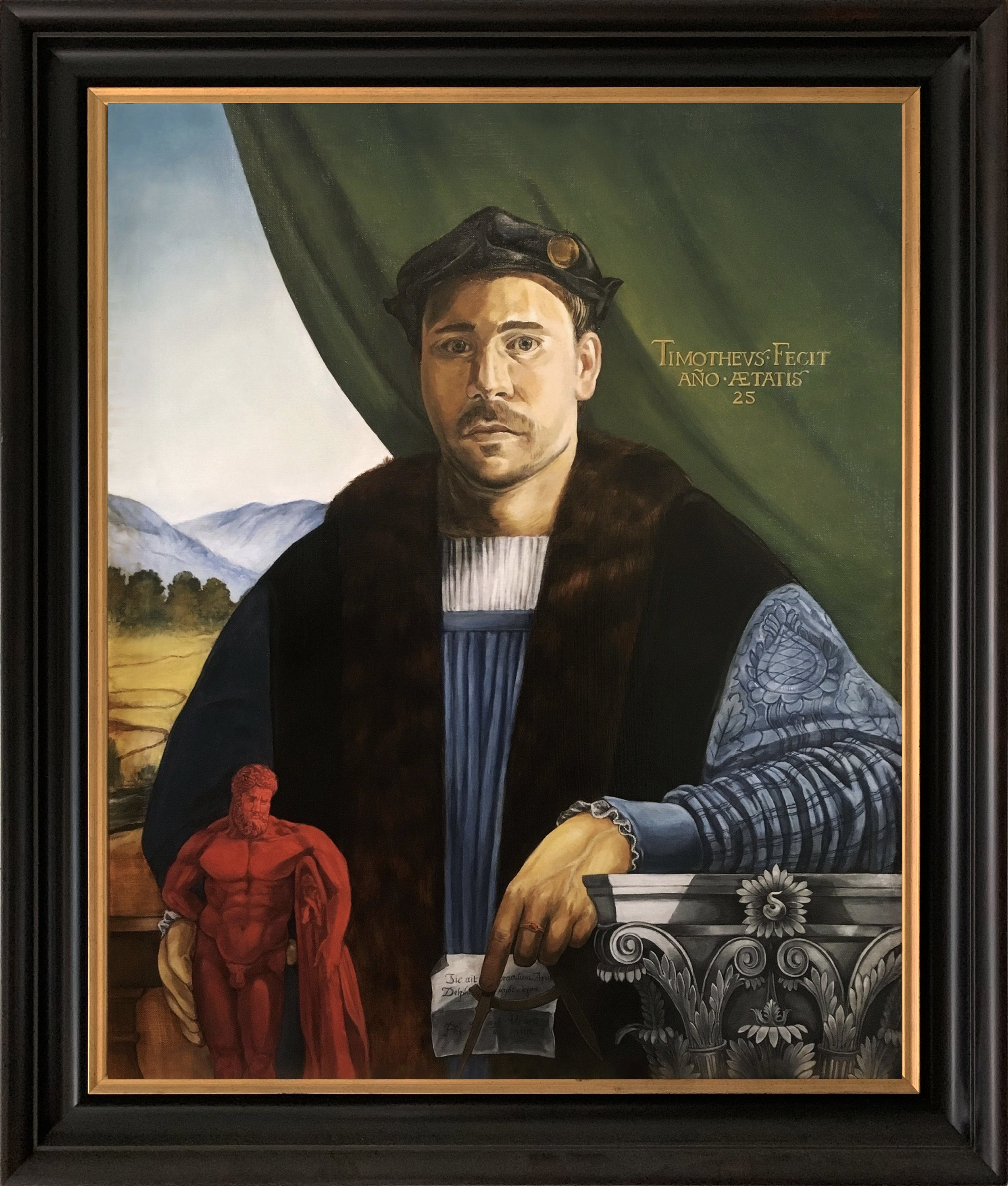
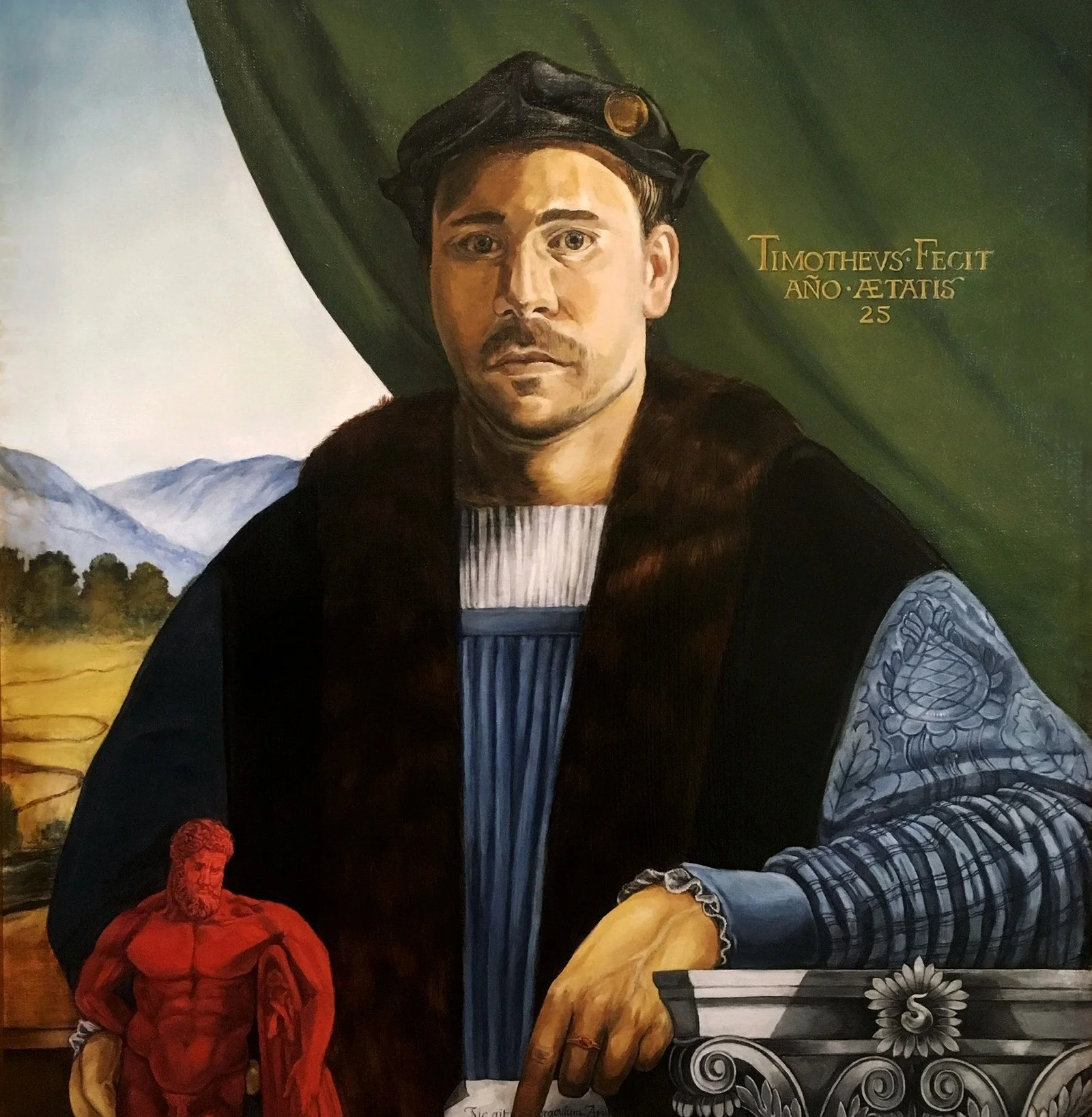
oil on canvas, 67 x 82 cm, 2017
This is a portrait of the artist garbed in the trappings of the Italian Renaissance umanista: blue damask silk sleeves and a black, fur-lined robe and cap. He holds a wax statue of the Farnese Hercules in his gloved right hand while in his left, a brass compass. A piece of parchment, pinned to his coat, bears the celebrated ancient Greek maxim: ‘Do nothing in excess.’ Appropriate advice to live by, though arguably the artist’s self-representation indicates that the appeal to moderation has been discarded.
Beneath the inked saying is the formula for the Golden Ratio - a geometrical equation that was tantamount to a humanist creed during the Renaissance, as it was seen to underpin so much of the beauty of the created order.
The objects held by the artist spell out a statement about his philosophy - that to produce truth and beauty in art is to measure and imitate the patterns of the cosmos, encompassed by and perfected in the human body, as exemplified by the wax statue.
The portrait’s aesthetic pays homage to the work of Raphael and other High Renaissance portrait artists such as Lorenzo Lotto.
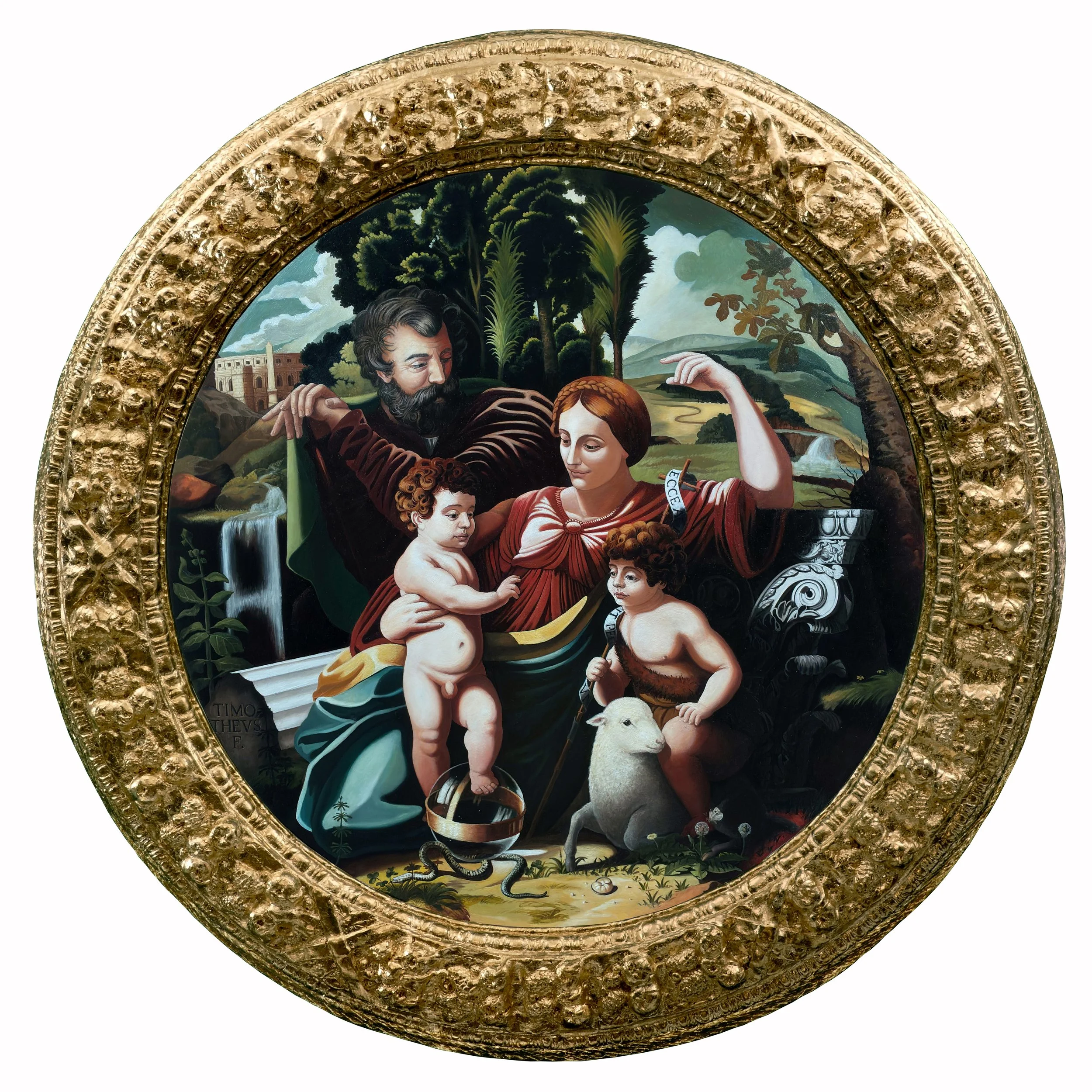
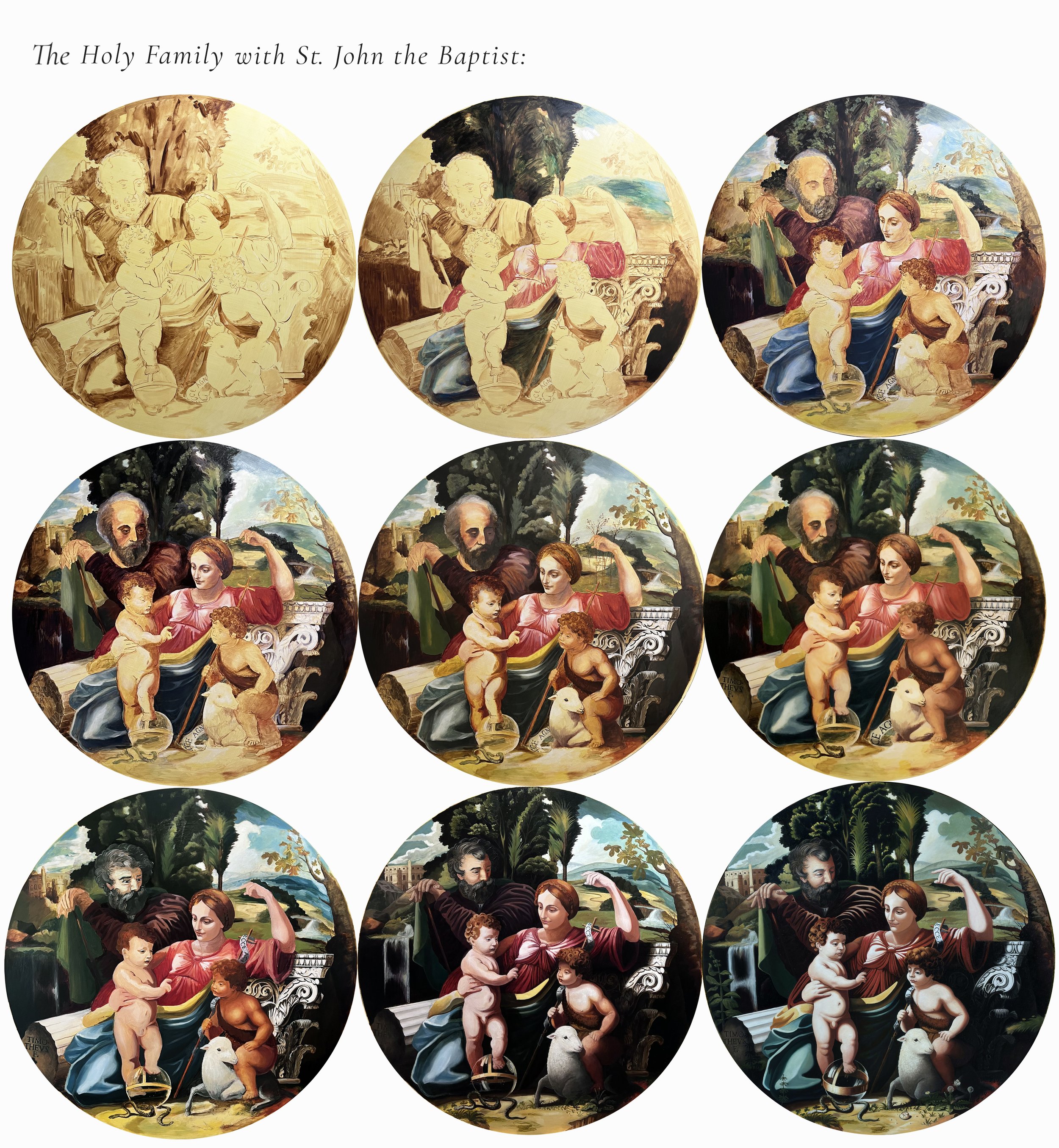
oil on panel, 90 × 90 cm (122 × 122 cm with frame), 2021-2026
The Holy Family sits nestled among marble ruins in a pastoral landscape. St. Joseph characteristically embodies a protective figure while excluded compositionally from the group of the Virgin, the infant Christ and St. John the Baptist. The pillar lying on the ground bottom left is used to honour this iconographic tradition, demarcating St. Joseph from the three central figures.
The group is anchored to the centre of the composition by the verdant copse of trees behind them. The fertile landscape mirrors the prophetic metaphors of the Old Testament - that the Messiah’s first coming would herald a new age, evoking lush gardens blossoming in the desert. A falling water brook left of the composition connotes Christ’s role as life-giving water - the antithesis to the barren and dying fig tree on the right, a damning parable that Christ directed towards the religious leaders during his ministry.
The infant Christ places a foot triumphantly on a glass sphere, representing the cosmos. Under its weight, the celestial orb crushes a serpent, symbolising the devil, harking to Christ’s ultimate defeat of Satan as prophesied in Genesis: ‘he will bruise thy head’. Such imagery also bears to mind Psalm 110: ‘Sit thou at my right hand, until I make thine enemies thy footstool’.
Christ’s role in undoing Satan’s work is recognised by St. John the Baptist, who kneels before him, accompanied by his typical attributes. He holds his traditional reed cross with a lamb at his feet and a scroll in Latin reading ‘ECCE AGNUS DEI QUI TOLLIT PECCATA MUNDI’ (‘Behold the Lamb of God who takes away the sin of the world’). His pose is a loose adaptation of the infant Baptist in Raphael’s La Belle Jardinière. Jesus acknowledges his cousin’s piety by raising his hand in a sign of benediction and to signal his role as salvator mundi.
The Virgin’s relaxed pose is both feminine and commanding, echoing the pose of Michelangelo’s Isaiah. The ornate Corinthian capital on which she leans lends her an elegant lyricism and the unfurling acanthus leaves of this more feminine architectural order appropriately represent her physical fruitfulness as the Theotokos.
The silent conversations in the composition follow a zig-zag pattern as St. Joseph looks at the Virgin, the Virgin at Christ, and Christ at St. John the Baptist. The whole composition is further unified by two intercepting triangles pointing in opposite directions to create a sense of balance and symmetry.
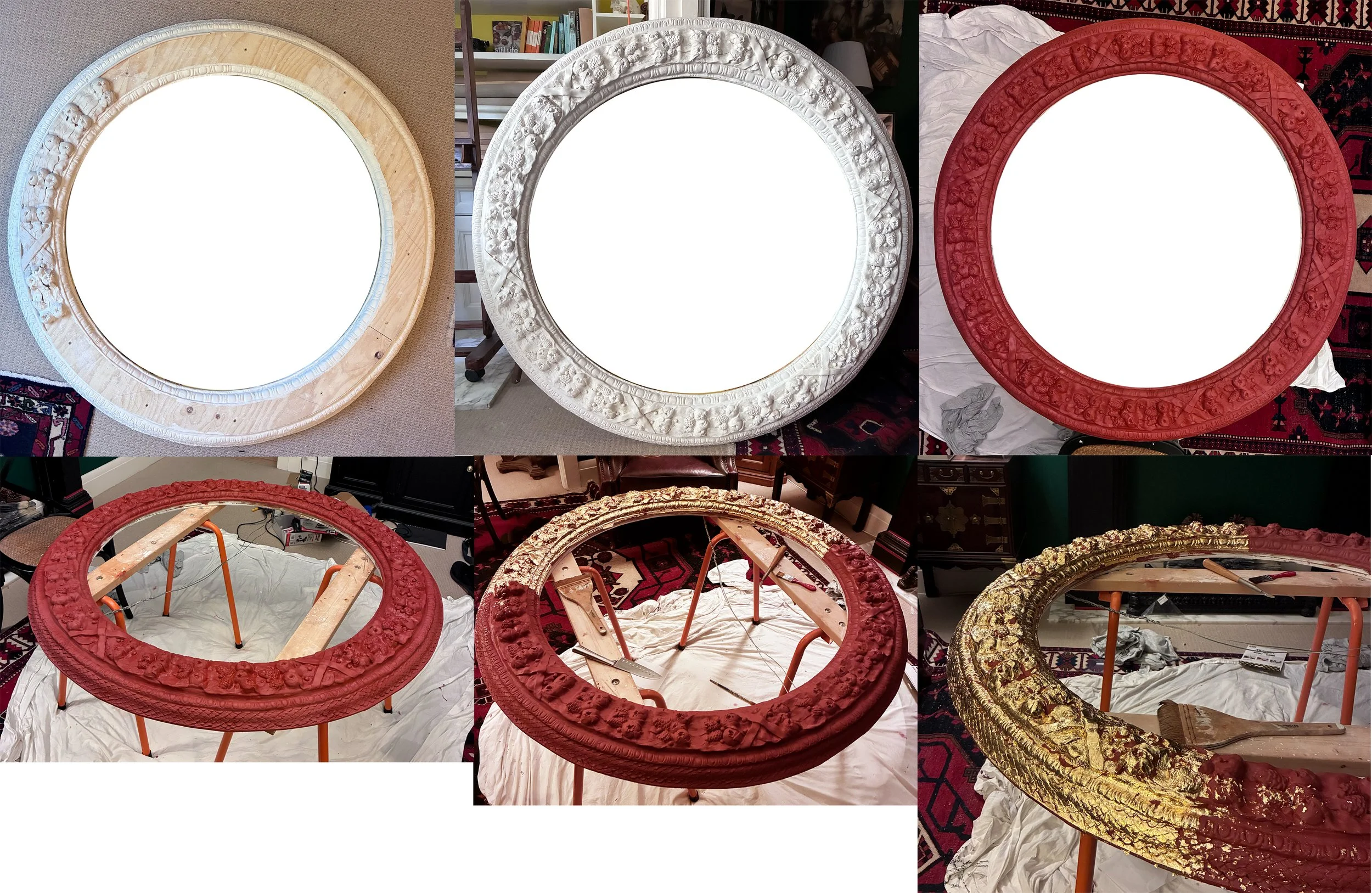
My aim is always to marry the two competing schools in Classical painting: colour and line. The figures are rendered in a manner intended to pay homage to the trinity of Italian Renaissance masters who are known for their strong sense of disegno, while the landscape adopts a distinctly Venetian, or perhaps Ferrarese, colour scheme, with particular influence from Dosso Dossi. The gilt frame adopts many of the motifs of Renaissance tondo frames for sacred subjects - pomegranates and pine cones joined together in a wreath to suggest ideas of both Christ’s Passion and Resurrection. The process of its construction is detailed below.
The frame took about 3 months to construct. It has a laminated wooden core. Its details were shaped by hand as well as by silicone moulds with a durable paper-based clay which naturally adhered to the wood fibres. The frame was sealed and then coated with a traditional Sinopian clay bole for water-gilding. It was then gilded with Dutch gold and afterwards sealed with a varnish to prevent oxidising and tarnishing.
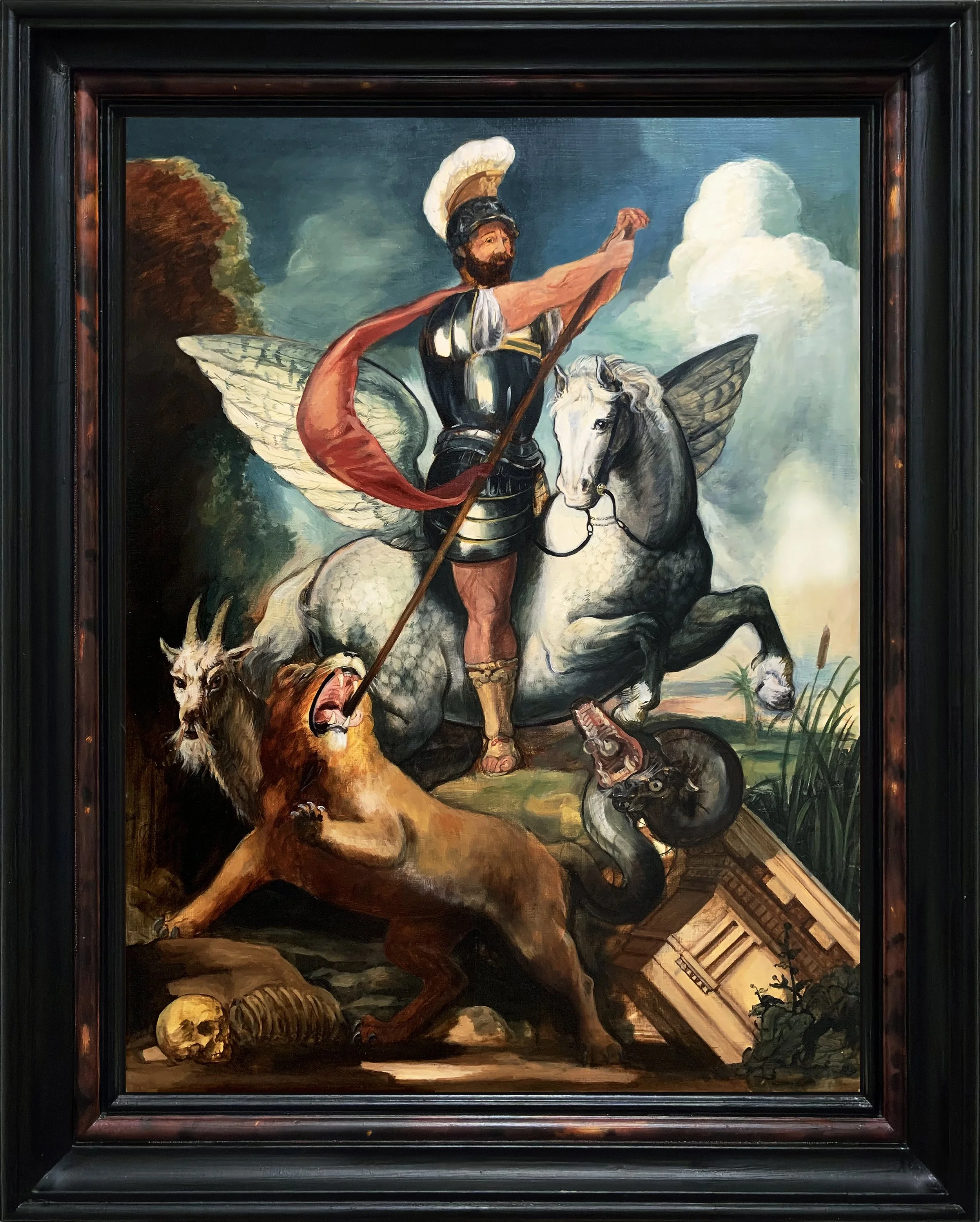
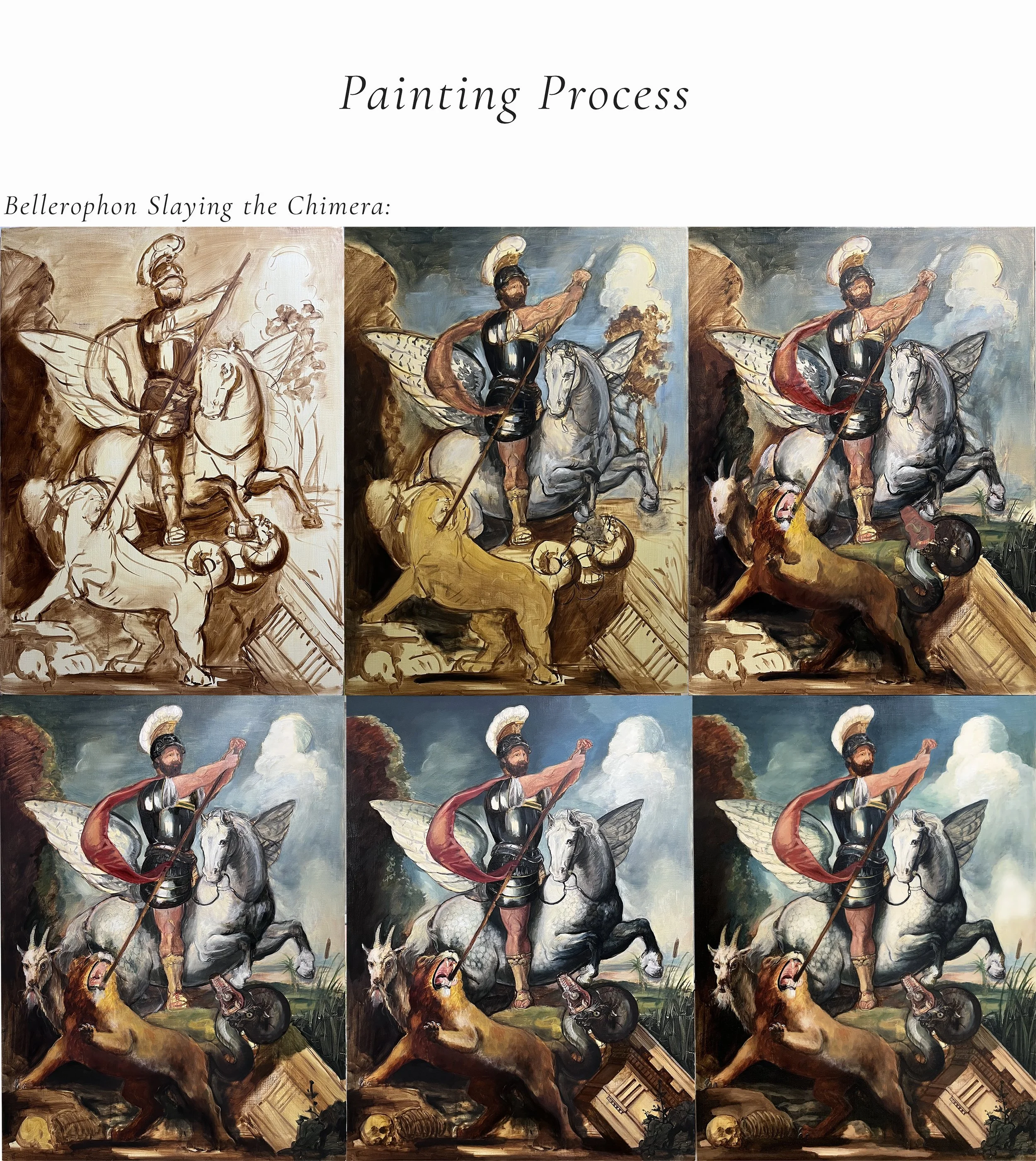
oil on panel, 56 x 76 cm, 2022-23
This is a small-scale study for a larger (as yet unpainted) work, depicting the ancient Greek hero Bellerophon astride the winged horse Pegasus, slaying the dreaded Chimera. The hero effortlessly plunges his spear through the throat of the beast’s lion head, while its goat half snorts out fire and its serpent’s tail writhes in agony, its head dashed against a broken architectural fragment. The hapless remains of the beast’s previous victims lie on the floor of the valley waste below.
The triumphalism of Bellerophon’s pose renders his imminent fate all the more tragic, since he would afterwards attempt to fly up to Olympus and assume the status of a god. His hubris, however, would be checked by Jupiter sending a gadfly to bite Pegasus, bucking the hero off and sending him back down to earth. The influence of Rubens, in particular his Decius Mus Cycle, was important for the execution of this painting’s composition and aesthetic.
oil on panel, 50.9 x 40.6 cm, 2022-23
This is a small-scale colour study that pays homage to the style of landscape popularised by 18th century painters like Richard Wilson. It refers to an early episode in the life of Christ when the Holy Family seeks refuge from King Herod in Egypt. The bucolic nook in the foreground shields the Holy Family from the harsh Egyptian heat. The flock of sheep on the right and the boy shepherd riding an ox centre, borrowed from Hubert Robert, underline the role of Christ as the Great Shepherd.
The Roman and Egyptian ruins inspired by Pannini on the right work in tandem with the trees on the left to frame the composition, including the monolithic pyramids, while equally conveying the fleeting transience of empires.
Meanwhile, Christ (with his family) is placed in compositional opposition to these ruins - Christ, who, by contrast, restores all things. He is the seed of the New Covenant planted in the land where the people of Israel were once enslaved, so that He might emerge as a new Moses, who brings his people true freedom from spiritual bondage: ‘…out of Egypt have I called my Son,’ (Hos. 11:1).
The Holy Family group itself is borrowed from Titian’s Holy Family with St. John the Baptist (c. 1521).
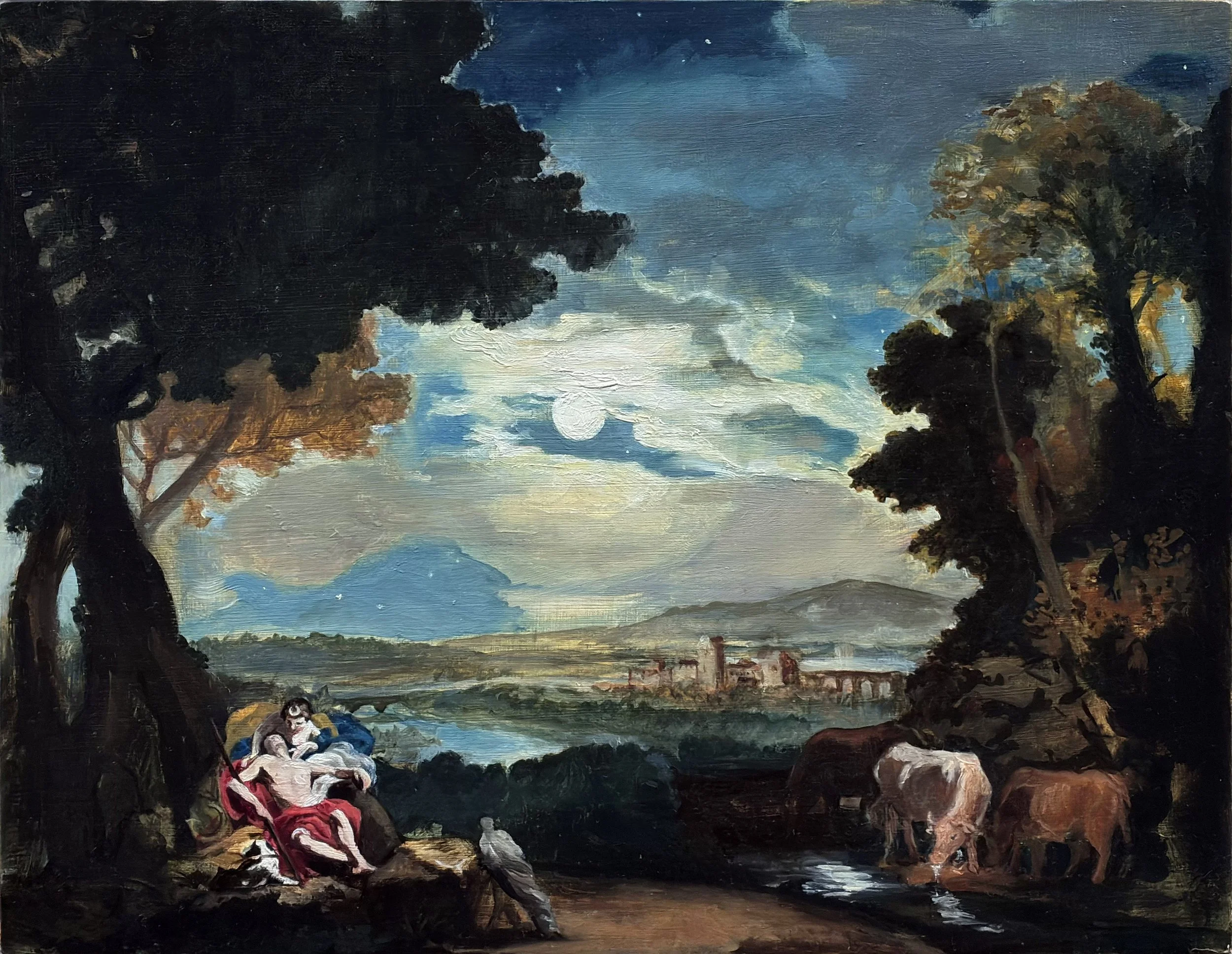
oil on panel, 35.6 x 28 cm, 2022-23
This is another small-scale colour study with roots in Richard Wilson’s compositional style, as well as the nocturnal landscapes popularised in the 18th century.
The goddess of hunting and the moon, Diana, spots a young Aeolian shepherd sleeping by his herds. Falling in love with him, she asks Jupiter to cause him to fall into an eternal sleep so that she can visit him every night.
The figures are borrowed from Pierre Subleyras’ Diane et Endymion (1740).
Imprimatura and underpainting: after preparing the panel with size (rabbit skin glue) and ground (lead white paint and chalk), a thin wash of varying amounts of yellow ochre, burnt umber or sienna (depending on the amount of warmth desired) is applied over the ground. This is called the imprimatura layer. The basic forms of the composition are then blocked in with the same colour. Some paintings (such as the King Solomon), are painted with colour directly onto the imprimatura after applying merely a linear underpainting without any tone.
Colour underpainting: basic forms are further developed and appplied with a lean layer of colour.
Continuation of Step 2. Development of pictorial elements. Compositional problems and colour relationships are worked out.
Colour overpainting: components are given greater detail and fatter layers of colour are applied.
Glazing: transparent layers of pigment are applied with binder to certain elements of the painting to add depth and complexity of colour.
Completion and varnish: final details are added or changed and colours and tones are nuanced with dry layers. The final painting is varnished with mastic.